
2026-07-12
Peugeot TU Individual Throttle Bodies: How to Pick a Kit That Fits and Makes Real Power
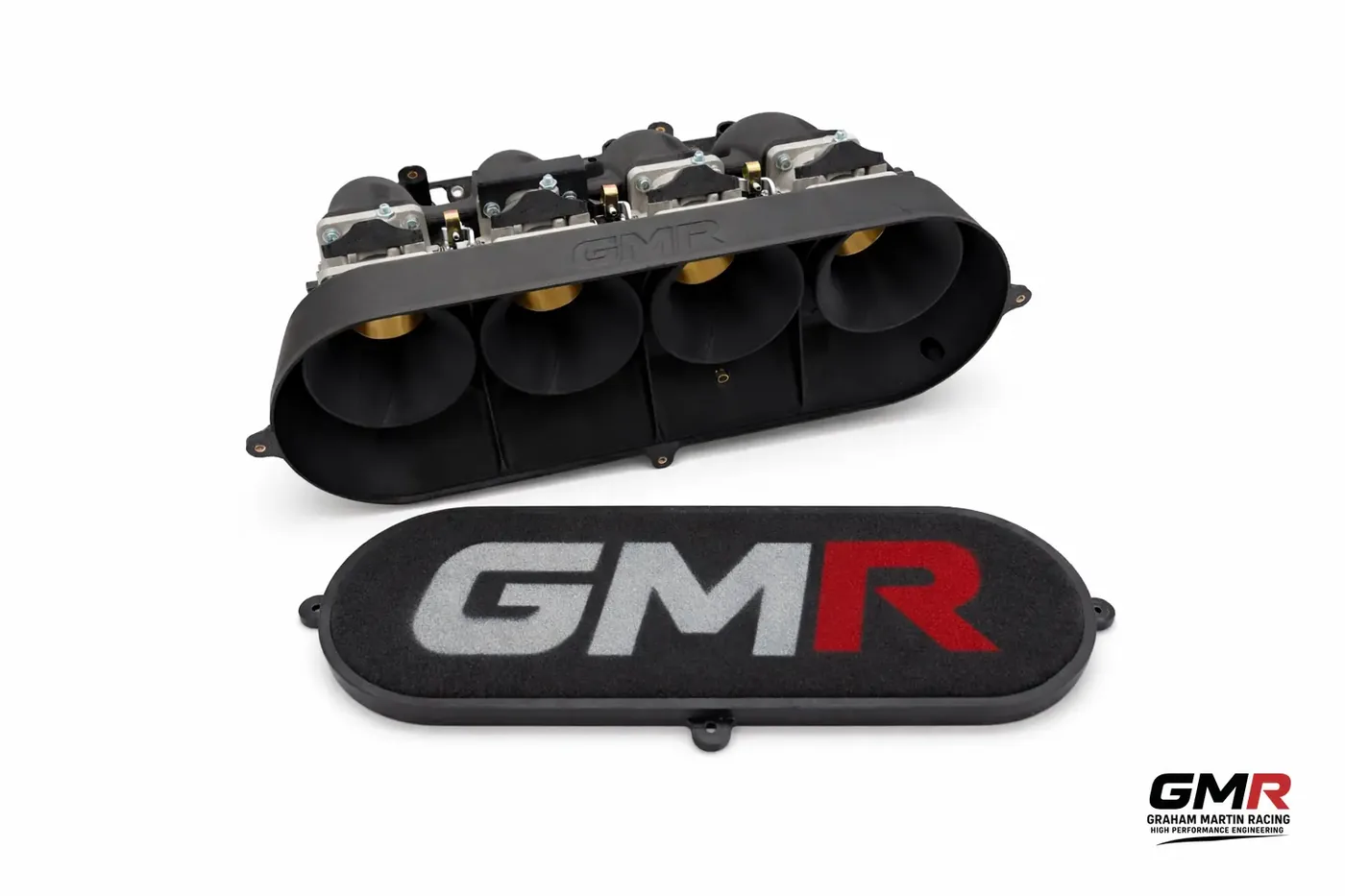
If you’re searching for peugeot tu individual throttle bodies, you’ve already worked out the obvious truth: the standard injection or carb setup on a TU is the single biggest restriction between the air filter and the valve seats. I’m Graham Martin, and I’ve spent enough time on TU-engined cars — Saxos, 106s, 205/106 hillclimb and slalom builds — to know that the difference between a kit that’s “close enough” and one engineered around your actual combination is worth real, measurable power. This is how I’d approach an ITB project on a TU, and what to specify so you don’t end up disappointed.
First, know which TU you’re actually building
The PSA TU engine ran from October 1986 right through to December 2014 — a long production life across a lot of displacements: 1.0 (954 cc), 1.1 (1,124 cc), 1.3 (1,294 cc), 1.4 (1,360 cc), 1.5 (1,527 cc) and 1.6 (1,587 cc). You’ll find them as 8-valve SOHC and 16-valve DOHC, with everything from Solex/Weber carbs to mono-point and multi-point injection on Magneti Marelli, Bosch or Lucas management. Factory output spans 45–125 PS, so the platform you start with matters hugely.
For ITB projects, the engines worth building are clear. The TU5J4 and TU5JP4 (1.6 16v) are the obvious targets — roughly 100–110 hp standard, a strong big-valve head, and the best low-down torque of the family. The 8-valve TU3 (1.4) is the other popular base, especially for budget or class-restricted builds. Know which one you have before you spend a penny: the TU5J4 turns up in pre-2001 Saxo VTS, early Xsara, 106 GTI and early 206, while the TU5JP4 lives in later Saxo VTS, C2 VTS, early C3, 206 XS/Quiksilver, 307 1.6 16v and late 106 GTI. The split affects VVT, sensors and management — and therefore your ITB and wiring choices.
Why ITBs work on a TU
The point of individual throttle bodies isn’t the noise. Each cylinder gets its own short, unobstructed runner and its own butterfly, so throttle response is immediate and the intake pressure waves aren’t shared and smeared across a common plenum. On a high-revving 16v TU that’s exactly what you want — strong column resonance tuned by runner and trumpet geometry, feeding a head that can actually use the air. I’ve written more on the principle in our guide to buying an ITB kit that actually fits and performs, and it applies directly here.
One caveat: ITBs reward a head and cam package that can breathe. On a TU3 with the smaller combustion chambers and modest valves, ITBs help, but the head is the limiter. Combustion chambers on TU3s and other small-valve heads are much smaller than on the big-valve heads (all TU5, TU2J2, TU3J2). The 1.3 Rallye, 1.4 XSi and 1.6 Rallye/XSi run big-bearing heads, and cams from other heads won’t simply drop in — so plan the whole combination, not just the throttle bodies.
The proven TU5 fast-road/competition combination
A combination I see work repeatedly: a TU5 bottom end (any 90 bhp 1.6) with a 1.3/1.4 XSi or 1.6 Rallye big-valve head, Catcams 646 or 640 grind, and a 1.3 Rallye inlet as the starting point. That always needs a remap or a standalone ECU — there is no “fit and forget” here. For slalom and tight technical work, the 1.6 (TU5) gives far more low-down grunt with a Catcams 646 than a 1.3 or 1.4 ever will, which is why I steer most road and sprint builds towards the bigger displacement.
Three real routes to ITBs on a TU
1. Purpose-built bolt-on ITB kits
Several established names make TU kits. Jenvey‘s TU5 1600cc kit (CKPG01) uses four ST45 taper bodies with 42 mm butterflies, an inlet manifold, fuel rail and four 40 mm airhorns, built for the Saxo and 106 GTI and made to order. AT Power takes a different approach with their Direct-to-Head (DTH) shaftless twin-butterfly 38 mm system for the TU5J4/TU5JP4: the patented shaftless, knife-edged blade design removes the central shaft to cut turbulence, with twin-oval housings CNC-machined from billet aluminium and port-matched to bolt straight onto the head face. AT Power claim removing the shaft adds up to 10% airflow versus a conventional shafted ITB — treat that as their figure, not a universal guarantee, but the principle is sound. Indicative pricing on the 106 GTI DTH set has been around £1,265; verify current before ordering.
danST Engineering offers DCOE-type kits for the 106 GTI, Saxo and C2 VTS (TU5 16v), plus — and this is the useful bit for 8-valve builders — a TU5 8v DCOE kit for the 106 XSi / Saxo VTR that can be adapted to older TU3 8v engines. Their kits come complete bar engine management: linkages, fuel rails, genuine Bosch injectors in a range of capacities, air filters and throttle sensors. Bore and trumpet length are buyer-specified, which is exactly how it should be.
2. Bike throttle bodies adapted to the head
A budget route that can work, but it’s fiddly. You’re matching bike-spacing bodies to TU bore spacing, sorting injector placement, building a manifold and adapting the fuel and throttle linkage. The parts are cheap; the engineering time isn’t. If you go this way, get the geometry measured properly rather than eyeballed.
3. A bespoke kit engineered around your build
This is where I sit. When the head, cam, displacement and target rev range are known, the throttle bore, runner length and trumpet profile can be specified to put the torque exactly where you use it — rather than accepting whatever a generic kit ships with. Trumpet length and radius are not cosmetic; they tune the pressure-wave timing, and the right entry radius keeps the flow attached at the bellmouth. We go into the mechanism in our piece on velocity stacks for ITBs, and the same thinking drives our bespoke intake manifold work. If you’ve built a Peugeot 16v before, our GTi6 ITB guide covers the larger XU sibling and the same engineering principles carry across. A bespoke route also means the surrounding parts are made to suit — see how we approach custom race engine components and full bespoke race engine manufacture. Related: if a carbon trumpet or plenum is on your list, our guide to a carbon intake manifold for a race engine covers what actually works, and for the 3D-printed prototyping side our colleagues cover how 3D printing fits the motorsport workflow (@ Ask The Nozzle).
Sizing the throttle bodies
Bigger isn’t automatically better. On a TU5, 38–42 mm covers the sensible window depending on cam, head flow and rev ceiling. Go too large and you lose port velocity at the rpm you actually drive at, blunting throttle response and mid-range. Go too small and you cap top-end. For a fast-road TU5 on a Catcams 646 with a big-valve head, I’d be in the 40–42 mm region; for a peaky, high-rpm sprint engine you can justify larger. The honest answer is that the bore should follow the airflow data for your head, not a number off a forum.
Don’t skip the calibration
ITBs change the fuelling and ignition demands completely. Throttle position becomes the primary load reference (alpha-N), idle control changes, and transient enrichment needs proper attention or the car feels lumpy and lean off-throttle. Every kit above requires a remap or standalone ECU — none of them is plug-and-play. This is the part most people underestimate; it’s also where the power and driveability actually live. Read how we approach it in ECU calibration for motorsport.
FAQ
Can I fit ITBs to an 8-valve TU3?
Yes — danST and others make 8v DCOE-type kits adaptable to TU3. Just be realistic: the small-valve, small-chamber 8v head is the airflow limit, so ITBs sharpen response and free some top-end rather than transforming the engine. Spend on the head and cam alongside the bodies.
Which TU is the best base for an ITB build?
The TU5 1.6 16v (TU5J4 or TU5JP4). It has the strongest head, the most low-down torque and the broadest support in off-the-shelf kits. Confirm whether yours is VVT, because it affects management and sensors.
How much do TU ITBs cost?
A purpose-built bolt-on kit such as the AT Power 106 GTI DTH set has been listed around £1,265, before fitting, injectors to suit and crucially the calibration. Budget for the remap or standalone ECU as part of the project, not an afterthought.
Do I really need a remap?
Yes. There is no exception. ITBs need an alpha-N fuelling strategy and proper idle and transient setup; a standard map will run badly or do damage. Factor a standalone ECU or full remap into every TU ITB build.
Get the base engine, head, cam and throttle sizing matched as one combination and a TU rewards you with sharp, eager response and genuine usable power. If you want a kit engineered to your exact build rather than a universal-fit compromise, that’s exactly what we do in Northampton — get in touch with the spec of your engine and I’ll tell you straight what’ll work. Related: once it’s built, find somewhere to use it with our friends at Trackday Finder’s guide to car track days in the UK (@ Trackday Finder).