
2026-10-07
GSX-R Throttle Bodies Kit: How to Spec, Re-Space and Fit One That Actually Works
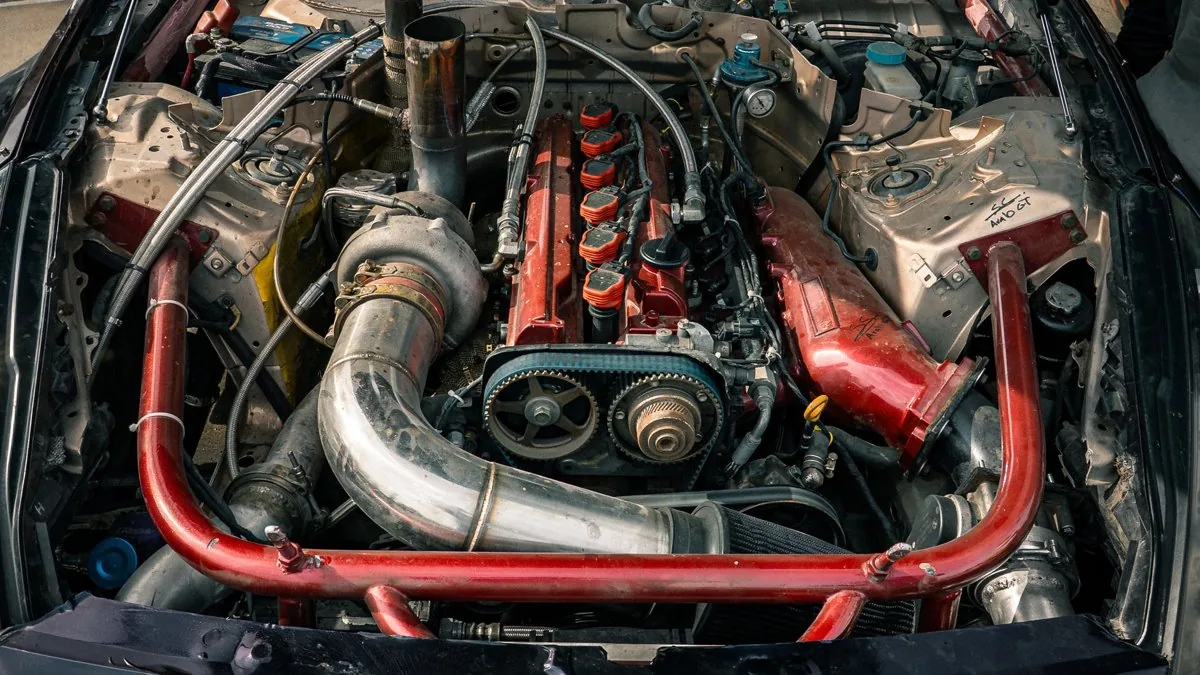
A GSX-R throttle bodies kit lives or dies on three numbers: the throttle plate bore, the port spacing, and the runner length from trumpet face to valve. Get those right and a set of re-spaced Suzuki bike bodies will out-respond and out-flow a single-throttle plenum on almost any four-cylinder car conversion. Get them wrong — bolt on a "universal" set at the wrong spacing with the stock injectors and no mapping — and you'll make less power than the standard manifold you threw away. This guide walks through exactly what to check, generation by generation, so your gsxr throttle bodies kit fits the engine you've actually got rather than the one the kit was photographed on.
Why GSX-R bodies are the default bike-TB conversion
Suzuki's GSX-R throttle bodies have become the de facto choice for individual throttle body conversions on everything from the Ford Zetec and CVH to the Mazda MX-5 and Vauxhall XE. The reasons are practical. They're tapered, short, light, cast in sensible bore sizes, and — crucially — millions were made, so used sets are cheap and reconditioned units are easy to source. The tapered inlet also does useful aerodynamic work: a bellmouth entry feeding a converging bore holds flow quality far better than a blunt DCOE-style throat.
The catch is that a bike engine and a car engine almost never share port spacing, injector packaging or fuelling architecture. A GSX-R four is designed around 80 mm cylinder centres and its own injectors, rail and ECU. Dropping that onto a Zetec at 92 mm centres is not a bolt-on — it's a re-spacing and re-fuelling job. That's where most kits fall down, and where the detail below matters.
GSX-R throttle body bore sizes by model
Bore is the first spec to pin down because it sets your airflow ceiling and the trumpet clamp diameter you'll need later. Suzuki's figures vary by year and sources frequently disagree by a millimetre or two, so treat the table as a starting point and measure the actual bodies you have before you commit to a manifold or stack kit.
| Model | Years | Throttle plate bore | Inlet (OD) taper | Injector | Notes |
|---|---|---|---|---|---|
| GSX-R600 | K1–K3 (01–03) | ~38 mm | ~45 mm tapering to 38 mm | ~240 cc/min | Overall length ~83 mm; 80-80-80 mm centres |
| GSX-R750 | 96–99 (33E5) | Smaller / coded 33E5 | — | Keihin | 98–99 units ~46 mm ID, 91 mm long, no secondaries |
| GSX-R750 | K1–K3 (00–03) | ~42 mm | ~54 mm tapering to 42 mm | ~240–270 cc/min | ~49.5–50 mm at inlet; same dims as GSX-R1000 |
| GSX-R1000 | K1–K2 (01–02) | 42 mm (head) | ~50 mm (top) | ~230 cc/min pintle | Four separate units |
| GSX-R1000 | K3–K4 (03–04) | 42 mm | ~50 mm | Pintle | Plug-and-play with 01–02 but made as a pair |
| GSX-R1000 | K5–K6 (05–06) | 44 mm | — | Dual injector | Different port spacing to earlier cars |
Two things are worth drawing out. First, the 600 and 750/1000 share the same 80 mm centres — the 750 bores are simply around 2 mm larger — so a manifold or re-space kit cut for one often suits the other. Second, the K5–K6 1000 moved to a different spacing and twin injectors, so don't assume a later set drops onto an early build. And resist the temptation to over-bore: a larger throttle gains top-end but costs mid-range velocity and torque. Match the plate to your displacement and rev ceiling, not to the biggest set on the shelf.
Port spacing: the number that decides whether it fits at all
Every factory GSX-R four — 600, 750 and 1000 — runs 80-80-80 mm port centres. Almost no car engine does. The Ford Zetec and CVH sit at 92 mm. This mismatch is the single biggest reason a cheap set of bike bodies ends up in a drawer: they physically will not line up with the head.
The fix is a re-space kit, which breaks the four bodies apart and resets them to the car's spacing. A typical Zetec/CVH re-space (80 mm to 92 mm) includes:
- 3 × new fuel rail tubes, +12 mm on the original length
- 3 × 2 mm steel throttle linkage extension tabs (these require welding)
- 9 × 12 mm aluminium spacers
- 3 × M5 threaded rods and associated fasteners
That welding step is where "close enough" bites. If the linkage tabs aren't set true, your throttle plates won't open in sync, and no amount of mapping will rescue the idle quality or part-throttle driveability of an unbalanced bank. This is exactly why we supply our own bodies with a complete fitting kit — hardware, O-rings, bolts for the manifold and the stack retention — and balance every set before dispatch. If you'd rather sidestep re-spacing entirely, our Zetec bike throttle body kit guide covers the full workflow, and the Zetec ITB kit article explains when purpose-built single-port bodies beat reconditioned bike units.
Where GMR's own bodies fit in
We build our own SF-style single-port throttle bodies in 40, 42, 45, 48 and 50 mm, in quantities of one to four. Single-port construction is the point: because each body is independent, you can set any port spacing you need rather than being locked to Suzuki's 80 mm. That removes the entire re-space-and-weld exercise. They seal on an O-ring at the head face — a maintenance-free, repeatable method with no paper gaskets to crush or creep — and ship with the hardware to bolt to an inlet manifold and retain velocity stacks. Injector options run from blanks (if you're feeding fuel through the head or manifold) to Bosch 550 cc units.
That said, I won't pretend re-spaced GSX-R bodies are never the right answer. On a tight budget, or on a well-documented application like an MX-5 where a proven tapered-40 mm kit already exists, reconditioned bike bodies are a sensible, effective route. The honest contrast is engineering, not dogma: bike bodies win on cost and availability; purpose-built single-port bodies win on spacing freedom, sealing and repeatability.
Injectors and fuelling: don't trust the headline claim
Stock GSX-R injectors flow roughly 230–270 cc/min depending on model and where you read it, at the standard EFI supply pressure of 3 bar (45 psi). You'll see kits advertised as "good for over 200 bhp on the standard 240 cc injectors," and builders rightly query it — run 180 bhp through a fuel calculator and you'll want something nearer 300 cc/min at 3 bar.
Both camps are partly right, and the resolution is in the variables the headline hides: brake-specific fuel consumption, injector duty cycle and fuel pressure. A sharp, well-mapped engine with a low BSFC and sensible duty cycle genuinely stretches small injectors further than a crude calculator assumes — and raising rail pressure lifts flow (GSX-R1000 injectors quoted at ~280 cc/min at 3 bar rise to ~310 cc/min boosted). So size injectors to your target power, BSFC and pressure, with headroom at the top of the rev range — never to a marketing line. For the full method, read our breakdown of how to size, position and plumb race fuel injectors and ITBs.
Two packaging points catch people out:
- Injector angle changes by generation. The later Keihin bodies spray at 45°, the earlier types at 60°. It only matters if you keep the injectors in the bodies — fit them into the head or manifold instead and the angle is irrelevant.
- Deleting the OE rail deletes the regulator. On engines like the Zetec where the standard injectors live in the manifold, you must use the bike injectors and rail — and removing the car's fuel rail usually removes its pressure regulator too. Budget for a replacement regulator.
A standalone ECU is mandatory
There is no "keep the factory ECU" option here. A GSX-R throttle bodies kit needs a standalone management system to drive the injectors and ignition — Omex, ME221/ME442, DTA and Megasquirt/Microsquirt are all common on these conversions. Even with the bodies bench-balanced before dispatch, the engine must then be mapped under real load on a rolling road with proper AFR equipment. Balancing sets the mechanical airflow; mapping sets the fuel and spark that keep it safe and make the power. Skip the mapping session and you're gambling your pistons on a basemap written for someone else's engine.
Velocity stacks and runner length: the free power most people leave behind
This is where the easy gains hide. Trumpet and runner length tune the pressure-wave behaviour in the intake — effectively ramming more charge into the cylinder at the rev point where the returning wave arrives as the valve closes. Jenvey's well-known guide puts the overall length, from trumpet face to valve head centre, at around 350 mm for a 9,000 rpm engine, scaling inversely with rpm: roughly 175 mm at 18,000 rpm, with a practical minimum of about 200 mm for a 7,000–9,000 rpm build. An under-length system is the single biggest cause of disappointment on ITBs — you can lose up to a third of the power potential by running trumpets that are too short.
For the trumpet alone, a useful rule of thumb is about 1.5 × its diameter. Longer runners fatten mid-range torque; shorter ones chase peak power at high rpm. The stacks themselves must match your body's inlet OD: a GSX-R600-based kit typically wants trumpets with clamp rings sized for a 44–45 mm inlet, while 750/1000 bodies need rings for a 54–56 mm inlet. Getting the clamp ID wrong is a common ordering error that leaves you with stacks that won't seat.
Supporting parts: TPS and spindle adapters
A re-spaced bike body still needs a throttle position sensor the car's ECU can read. Our TPS adapter works with both clockwise and anti-clockwise bodies and can mount on either end of the spindle, and the accompanying adaptor plate suits the 8 mm D-shaft common to both throttle bodies and carburettors. It's a small part, but a badly mounted TPS gives a noisy, non-linear signal that wrecks transient fuelling — worth doing properly.
FAQ
Will GSX-R600 and GSX-R750 throttle bodies interchange on a car?
Mechanically they're close: both use 80 mm port centres, with the 750 bores about 2 mm larger. A manifold or re-space kit cut for one usually suits the other. The practical differences are bore size (and therefore airflow and trumpet clamp diameter) and injector flow, so pick the generation that matches your target power and rev range, and measure before you order stacks.
How much power will stock GSX-R injectors support?
It depends on your BSFC, injector duty cycle and fuel pressure, not on a fixed horsepower figure. Stock injectors flow roughly 230–270 cc/min at 3 bar; a well-mapped naturally aspirated engine can run surprisingly high on them, but if a fuel calculation at your target power shows them maxing out, up-size the injectors rather than chasing duty cycle into the red.
Do I have to re-space GSX-R bodies for every car engine?
For most, yes — factory bodies are fixed at 80-80-80 mm and few car heads share that. You either fit a re-space kit (new rail, spacers, extended welded linkages) or use purpose-built single-port bodies like ours, which can be set to any spacing and skip the re-spacing work entirely.
Can I run a GSX-R throttle bodies kit on the standard car ECU?
No. These kits require a standalone ECU to run the injectors and ignition, followed by a proper mapping session on a rolling road with AFR measurement. Balancing the bodies sets the airflow; mapping sets the fuelling and timing that make it safe and powerful.
The bottom line
A GSX-R throttle bodies kit is one of the best-value routes to real ITB response on a four-cylinder car — provided you treat bore, port spacing, injector sizing, runner length and mapping as a system rather than a parts list. If your application is well-trodden and the budget is tight, re-spaced bike bodies are a proper tool. If you want spacing freedom, O-ring sealing and balanced, repeatable bodies without the welding, our single-port SF-style kits are built around your engine from the start. Either way, measure first, map properly, and don't let a one-millimetre assumption cost you a third of your power.