
2026-07-07
Throttle Bodies for Kit Cars: How to Choose a Set That Actually Fits and Performs
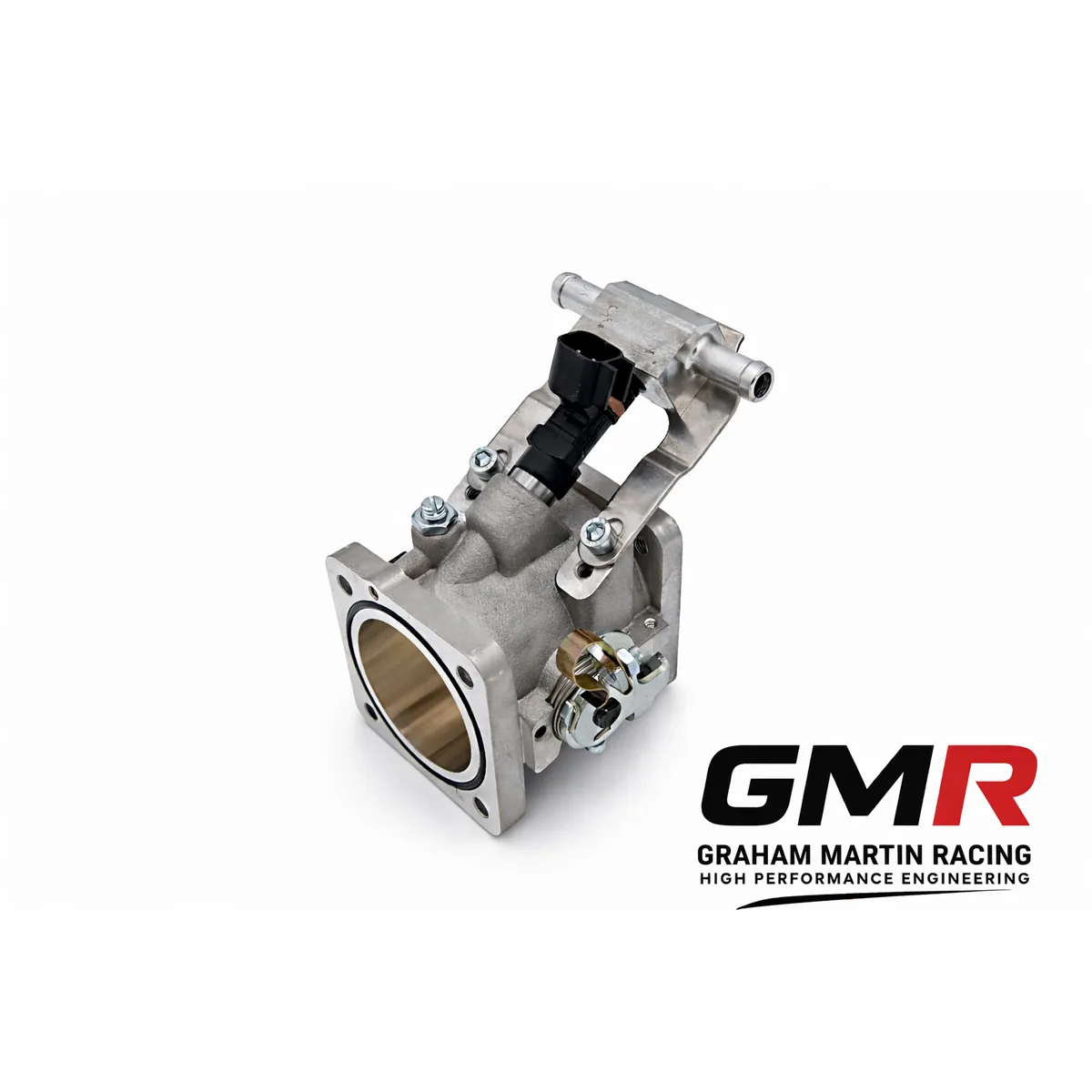
Kit cars are where individual throttle bodies belong. You’ve usually got a clean sheet: an engine dropped into a light chassis, no factory airbox to work around, and an owner who cares about how the thing drives rather than how quietly it idles at a set of traffic lights. That’s the ideal case for a proper ITB setup. But I see the same mistakes over and over, and almost all of them come down to buying on brand name and butterfly diameter instead of buying for the engine and the way the car is actually used. This is how I’d approach throttle bodies for kit car builds if it were my project on the bench.
What individual throttle bodies actually do
An ITB system gives each cylinder its own throttle body and its own intake path, in place of a single throttle feeding a shared plenum. The point isn’t the noise or the look — it’s that every cylinder sees the same volume of air, travelling the same distance, so each one can be tuned at its performance maximum rather than being held back by whichever cylinder the shared plenum happens to starve.
Don’t confuse this with throttle body injection (TBI), which is a single-point system: one or two injectors squirt fuel above the throttle plate and the mixture is then divided up by the manifold. That’s the opposite of what we’re doing. With ITBs you get per-cylinder control, sharper throttle response and the ability to exploit intake pressure-wave tuning through the trumpet length. For further background it’s worth reading our piece on how to buy an ITB kit that actually fits and performs.
The common kit-car engines and where they land
Most UK kit cars sit on a handful of engines, and each has a well-trodden ITB path.
- Ford Zetec (1.8/2.0 “blacktop”/”silvertop”): the default kit-car engine for decades. Throttle bodies are offered in 42mm, 45mm and 48mm, machined with o-ring grooves to seal directly to the manifold and with idle bleed adjustment built in. A 45mm setup is the sensible track/rally/road choice with strong midrange; 48mm taper bodies (with a 45mm butterfly) come with a matched inlet manifold, fuel rail and 90mm airhorns.
- Ford Duratec (2.0/2.3/2.5): used across Caterham, Westfield and many kit cars. As a rule of thumb, 45mm is proven ideal up to around 250 bhp, 48mm for 250 bhp and above, with ported 48mm and 50mm options reserved for high-output or larger-capacity builds.
- Ford Crossflow, BMW straight-six (M20/M50/M52/S52), M54, Fiat Punto 16v: all well served by ITB and bike-throttle conversion kits — a good route to real power for minimal cost.
- GM LS V8: for V8 kit cars, typically eight 51mm throttle openings with linkage and bodies CNC-machined from 6061 billet aluminium.
Direct-to-head, manifold-mounted or carb-replacement?
This is the decision most people skip, and it matters more than the badge on the throttle body.
Direct-to-head (DTH): the throttle bolts straight onto the cylinder head port. On the Duratec, for example, DTH throttles sit at the same 17° angle as the head port and seal against it with an o-ring groove. Properly ported, a DTH throttle achieves the same results as tapered or roller-barrel bodies for less money, while being lighter and more reliable. For a fresh kit-car build this is usually where I’d start.
Carb-replacement (DCOE/IDA): if the engine already runs a sidedraught (Weber DCOE) or downdraught (IDA) manifold, you can fit throttle bodies made to that exact bolt pattern. IDA-style EFI bodies replicate the Weber IDA footprint so they bolt straight onto a standard IDA manifold — ideal for converting an old carburetted build to injection without changing the manifold.
Heritage/period-look kits: for a car that wants the carburettor aesthetic, 5° heritage manifolds place the bodies at the same angle as a pair of carbs, complete with built-in fuel rail, injectors, TPS and short airhorns.
I won’t pretend one route always wins. DTH is my default because it’s light and clean, but if your manifold is already sorted, or the engine’s geometry calls for a separate manifold to get the runner lengths right, that’s the tool to reach for. I’ll tell you honestly which case applies to your combination rather than sell you the option that suits me. Our overview of why engine-specific beats universal every time goes deeper on that principle.
Sizing: the single most-mistaken choice
If you take one thing from this article, take this: the most common error is oversizing. Bigger butterflies feel like more power on paper, but airflow through a throttle body is governed by air velocity, not just cross-sectional area. Go too big and you drop intake velocity everywhere below peak, which kills throttle crispness, wrecks part-throttle drivability and softens midrange torque — the exact thing that makes a light kit car fun to drive.
Match the bore to the engine’s airflow at the rpm you actually use. A 2.0 Zetec road/track car is happier and quicker on 45mm than 48mm, because it’s on the meaty part of the torque curve far more of the time. Only chase the bigger bore when the capacity, cam and head flow genuinely demand it. Get the sizing right and the trumpet length dialled in, and you’re using intake pressure-wave behaviour to pack the cylinder — a free top-up of cylinder filling at the rpm you tune for.
Construction and the details that separate a good body from a cheap one
Quality ITBs are CNC-machined from aerospace billet aluminium — 6082-T6 temper is typical, often paired with laser-sintered PA12 nylon components. The engineering details that matter:
- Butterfly and spindle design: shaftless butterfly technology with knife-edged plates removes the airflow blockage of a traditional shaft. Where a spindle is used, profiling it to minimise cross-section at full throttle recovers flow, and a shallow shut angle (8° rather than the usual steeper angle) gives far finer control at small throttle openings — that’s your drivability.
- Injector position: placing injectors further upstream, directly in the part-throttle turbulence of the butterfly, gives the fuel more time and distance to mix, which lifts both torque and power.
- Shafts and bearings: where fitted, centre-less ground 12L14 steel shafts on sealed ball bearings, rig-tested to over a million cycles, are what stop a throttle developing slop after a season.
Cast systems are significantly lighter than fully CNC parts where a manufacturer runs their own foundry, which is worth weighing up on a car where every kilogram counts. We manufacture our own carbon composite and Direct Digital Manufactured intakes, trumpets and airboxes for exactly this reason — so the airflow path, packaging and weight are engineered around your specific engine rather than pulled off a universal shelf. If you’re interested in how DDM parts fit a race build, our friends have written up how 3D printing fits the motorsport workflow.
Don’t forget the ECU and the linkage
ITBs run on manifold-less, per-cylinder airflow, so they need an aftermarket ECU running alpha-N or a blended alpha-N/MAP strategy — a factory MAF-based map will not cope with the near-atmospheric idle signal. Budget for proper calibration from the start, not as an afterthought. That’s core to what we do; see our race engine calibration service for how we approach it.
Linkage is the other thing people underestimate. Uneven actuation across the bodies means uneven idle and a lumpy tip-in no map can hide. Getting the actuation geometry right is a job in itself — our write-up on getting ITB throttle linkage right uses the K20 as an example but the principles carry across every engine.
Frequently asked questions
Will individual throttle bodies pass a UK IVA test?
Mechanically, yes — ITBs are widely fitted to IVA-registered kit cars. The consideration is emissions and drivability at test conditions, which comes down to calibration. A properly mapped ITB engine can idle cleanly and meet the required limits; a poorly mapped one won’t. Sort the ECU work and it’s a non-issue.
What size throttle bodies do I need for a 2.0 Zetec kit car?
For a road and track 2.0 Zetec, 45mm is the sweet spot — strong midrange and sharp response. Step up to 48mm only if you’re running a bigger cam, ported head and chasing top-end power at the expense of low-rpm crispness.
Are direct-to-head throttle bodies better than manifold-mounted ones?
For most kit-car builds, yes — DTH is lighter, cleaner and, once ported, matches tapered or roller-barrel throttles for less money. The exception is when the engine needs specific runner lengths a separate manifold delivers, or when you’re reusing an existing DCOE/IDA manifold.
Can I convert my carburettor kit car to throttle bodies?
Absolutely. IDA-style EFI bodies bolt straight onto a standard Weber IDA manifold, and DCOE-pattern bodies do the same for sidedraught setups, so you keep the manifold and add fuel injection, an ECU and proper mapping.
The short version
Buy for the engine and how you drive it, not for the biggest butterfly you can afford. Get the sizing right, choose the mounting style your build genuinely needs, insist on real engineering in the throttle body itself, and back it all with a proper standalone ECU and calibration. Do that and a kit car comes alive in a way a shared-plenum intake never will. If you tell me your engine, target output and how the car’s used, I’ll tell you exactly which setup fits — and which one doesn’t. Related: once the build’s sorted, our friends at Trackday Finder cover Snetterton track days and European track days for putting it to use.
Related: Throttle Body Linkage Kit: How to Get the Actuation Right for ITBs and Single Bodies