
2026-08-29
Performance Engine Pistons: How to Choose 4032 vs 2618, Clearances and Ring Packs That Survive
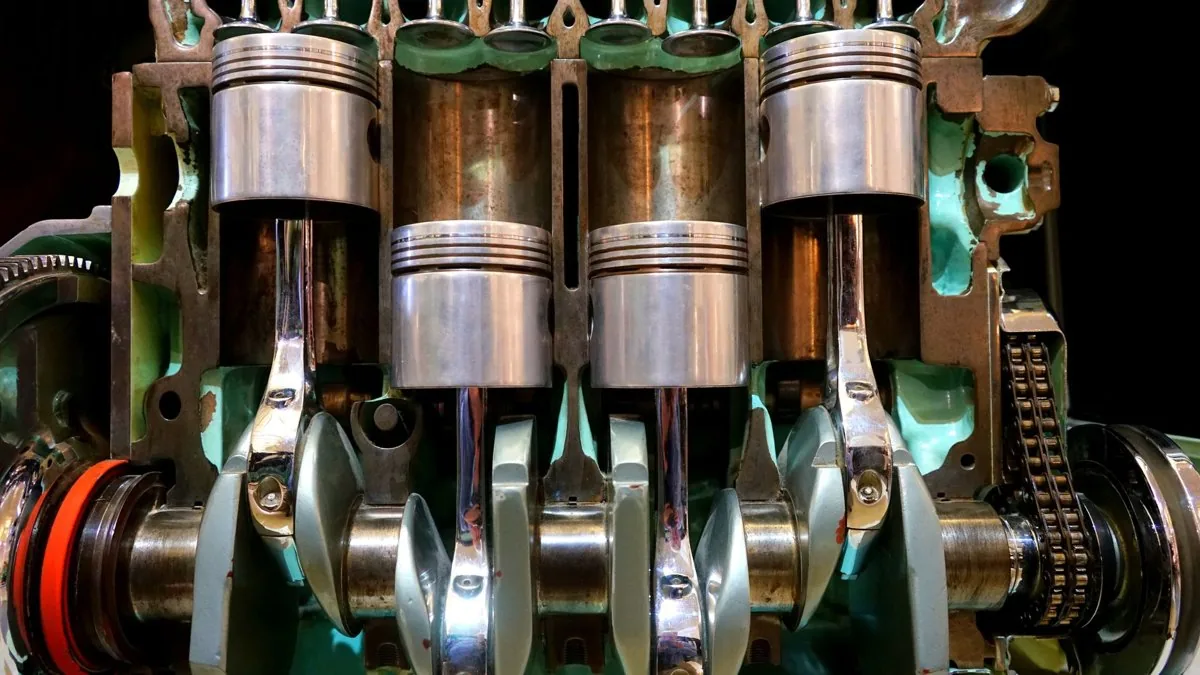
The single most consequential decision in a performance piston build is the alloy: 4032 versus 2618. Get that right and the rest — skirt profile, coatings, ring pack, clearance — falls into place around your combination. Get it wrong and you either wear the engine out early or hand a detonation event more piston than it can absorb. Performance engine pistons are not a "buy the strongest one" purchase; they're a set of trade-offs you tune to your cylinder pressure, RPM and how the car is actually used.
This is a build-planning guide, not a catalogue. I'll take you through construction types, the 4032/2618 decision with real expansion and clearance numbers, the design features that actually earn their place, coatings, and how to specify the ring pack — because the ring pack is chosen with the piston, not bolted on afterwards. Where a figure is contested between sources, I'll say so rather than pretend the industry agrees.
Construction types: cast, hypereutectic, forged
Three routes cover nearly everything on the shelf, and they differ in how the aluminium gets its final shape and grain structure.
- Cast — the OE standard. An aluminium alloy infused with nickel, magnesium and copper, with silicon added for wear resistance and dimensional stability. Poured into a mould. Cheap, dimensionally stable, fine for stock power.
- Hypereutectic — still a casting, but with the silicon content raised. Engine Builder cites 16–18% silicon; other sources put it at 12–15%, so treat the exact figure as contested. The extra silicon gives a stronger part with better thermal behaviour, and because it expands less, it can run tighter piston-to-wall clearance. That makes it a strong choice for a stock or lightly-uprated engine where longevity beats ultimate output.
- Forged — made from a billet of extruded aluminium, forge-compressed into rough shape, resulting in a denser, more ductile material. Much stronger and more forgiving than cast or hypereutectic. The blank then needs far heavier machining than a casting, which is why forgings cost more.
Strength ranking, roughly: cast → hypereutectic → forged. For anything running boost, nitrous or serious RPM, forged is the answer — hypereutectic simply doesn't have the strength once cylinder pressure climbs. It's worth remembering forging isn't exotic: Dodge Vipers ran forged pistons from 1992–1999 before switching to hypereutectic, which tells you the choice is about application, not prestige.
4032 vs 2618: the decision that defines the build
Once you've committed to forged, you choose between two alloys, and they behave differently enough that picking the wrong one shows up on the first cold start and, eventually, on the first detonation event.
4032 is a high-silicon alloy — a full 12% silicon. Silicon reduces aluminium's expansion rate, so a 4032 piston runs tighter cold clearances, runs quieter cold, and — critically — resists ring-groove wear better. The ring groove is the position that matters most for sustained performance: hold the groove clearance and you hold the ring seal over miles. Its weakness is ductility. Reduced ductility means 4032 is less tolerant of the extreme impact loads of detonation or unforeseen contact; it will crack where a 2618 might deform and survive.
2618 is a low-silicon, high-expansion alloy used for high-boost and extreme-duty racing. It's more ductile and more forgiving under load, which is exactly what you want when cylinder pressure becomes enormous — CP-Carrillo cites 2618-T61 as the predominant material for high-cylinder-pressure applications for precisely that reason. The cost is expansion: a 2618 piston expands roughly 15% more than a 4032 equivalent, so it needs more cold clearance and rattles more when cold. It also distorts sooner over time, so you trade some longevity for that impact tolerance.
| Property | 4032 | 2618 |
|---|---|---|
| Silicon content | ~12% (high) | Low |
| Thermal expansion | Lower | ~15% more than 4032 |
| Cold clearance needed | Tighter (typically 0.0005–0.001" less) | Larger |
| Cold-start noise | Quieter | Noisier (rattle) |
| Ring-groove wear resistance | Superior | Lower |
| Detonation / impact tolerance | Lower (can crack) | Higher (more ductile) |
| Best suited to | Street / light track, moderate boost or nitrous | High boost, nitrous, extreme-duty racing |
Selection rule of thumb: for street use and light upgrades, 4032 is the smarter part — quieter, longer-lasting rings, tighter build. For serious track time or big power and torque increases, 2618 is the one to reach for. Note also that not all 4032 is forged; both alloys arrive as bar stock and are either forged to near-net shape or CNC-whittled into billet pistons.
Piston-to-wall clearance: match it to the alloy
Clearance follows directly from the alloy's expansion behaviour, and it is the number most commonly fudged with a "close enough" measurement. As an indicative example, an N54 builder reported roughly 0.0015–0.0020" for 4032 versus a larger figure for 2618. One published 2618 figure of ".035"" is almost certainly a typo for 0.0035" — flag anything that extreme and cross-check it against the piston maker's own spec card, never a forum number. Every serious manufacturer supplies a clearance spec for that specific part; use it.
The mechanism is simple. Too tight and a hot 2618 piston scuffs the bore. Too loose and a cold engine rattles, rocks the piston harder at reversal, and accelerates skirt and bore wear. The piston-cylinder system is the dominant wear source in the engine — about 50% of total wear loss comes from it — so clearance is not a detail. This is the same discipline I preach for the whole rotating assembly in our builder's guide to pistons, rods and cranks.
Design features that actually earn their place
A performance piston isn't just a stronger blank; the geometry does specific jobs. The ones worth paying for:
- Slipper/low-drag skirt — a strong, lightweight, low-drag forging that beats the traditional full-round skirt for friction and mass.
- Contact-reduction (anti-detonation) grooves — shallow, softly radiused grooves on the outer wall between the dome and top ring groove. They limit piston-to-wall contact at high RPM and temperature, and disrupt the pressure waves caused by detonation, protecting the top ring.
- Radiused valve reliefs — a slight radius on the relief edges removes sharp machined edges that act as detonation initiation points.
- Window milling — material removed inside the skirt either side of the pin axis for weight reduction, without sacrificing load path.
- Vertical gas ports — 8 to 12 vertical holes drilled around the deck at the radius of the top ring groove's back face. They route combustion pressure behind the top ring to force it against the bore for a better seal. Effective, but they load the ring and bore harder — a race feature, not a long-life street one.
Crown shape — flat-top, dish or dome — is chosen to hit your target compression ratio against a known chamber volume and deck clearance. That's a compression and quench calculation, not a styling choice, and it's the kind of detail-level thinking that separates a repeatable engine from a lucky one, as I've argued in how the details actually make power, grip and repeatability.
Coatings: what each one is for
Coatings are targeted, not decorative. Use the one that fixes your problem:
| Coating | Where | Job |
|---|---|---|
| Anti-friction (e.g. Grafal) | Skirt | Reduces drag, scuffing, friction, bore wear and piston noise — especially during cold-start rock and transition travel |
| Phosphate | Ring grooves / pin bores | Prevents microwelding in the grooves and pin galling |
| Hard anodising | Top ring groove | Extra protection against groove microwelding for extreme-duty use |
| Thermal barrier (ceramic) | Crown/dome | Protects the dome from cylinder pressure and heat under boost/nitrous |
One practical detail that bites builders: skirt coating adds material. Typical build-up is 0.0005" per surface, and your finished skirt diameter must include the coating — measure and set clearance to the coated dimension, not the bare forging.
Specify the ring pack with the piston
Order the rings first, then the pistons. Depending on bore and piston diameter, off-the-shelf rings may or may not exist for your application, and it's cheaper to discover that before the pistons are machined. A common performance pack — for example a MAHLE POWERPAK — arrives complete with pins, clips and a 1.5mm / 1.5mm / 3.0mm ring set.
Ring width scales with application severity, and the extremes are instructive. A supercharged nitromethane drag motor can bend a 2.0mm top ring straight out of its groove in under four seconds; a maximum-effort naturally aspirated engine of the same size is happy on a 1.0mm-or-thinner top ring. Thinner rings conform better and follow the bore at high RPM; wider rings survive brutal cylinder pressure. Low-tension steel rings are about a third stronger, a third lighter and far more conformable than cast iron, giving a better seal, better high-RPM control and longer life.
Specify all of it deliberately: ring width, radial wall thickness, base and facing material, ring tension and end gap. On end gap, the rule of thumb is per inch of bore — Wiseco recommends around 0.004" per inch for a naturally aspirated street engine (so a 3.898" bore gives roughly a 0.016" minimum top gap), while a high-performance street/strip build wants around 0.0045" per inch. Boosted and nitrous engines open up further. The gap exists so the ring can expand hot without the ends butting; too tight and the ends touch and pick up the bore. Always confirm against the ring maker's spec for your material and application.
How GMR builds around your combination
None of the above works as a "universal fit" parts list. The pistons, rings, clearance, crown volume and coatings are one system, and they get specified against your bore, your target cylinder pressure and how the car earns its keep. That's the same made-to-fit philosophy behind our intake and calibration work — we build the part around the engine, then prove the geometry on real data, whether that's a bespoke race engine or a club-legal package like the ones covered in our guide to building a legal, repeatable engine that finishes races. If you're running a Honda K20, the piston choice feeds straight into fuelling decisions covered in our K20 injector sizing guide.
FAQ
4032 or 2618 for a turbo street car?
If it's mostly street with moderate boost and you value refinement and long ring life, 4032 is the better all-rounder. Once you're running high boost or spending real time on track — where a detonation event is more likely and more punishing — 2618's ductility makes it the safer choice, at the cost of cold rattle and slightly reduced longevity.
Why do 2618 pistons rattle when cold?
2618 expands roughly 15% more than 4032, so it's built with more cold clearance to leave room for that growth. Cold, that extra clearance lets the piston rock in the bore until it heats up and takes up the gap — hence the noise. It's normal for the alloy, not a fault.
Do I really need to order rings before pistons?
Yes. Off-the-shelf rings aren't available in every diameter and width combination. Confirming the ring pack first means the piston can be machined to grooves that suit rings you can actually buy — and re-buy at a rebuild.
What piston-to-wall clearance should I run?
Use the figure on the piston maker's spec card for that exact part and alloy — it accounts for the forging, skirt profile and any coating build-up. As a rough orientation, high-silicon 4032 runs tighter than low-silicon 2618, and coatings add about 0.0005" per surface that must be included in your measured diameter.