A prototype inlet system that once took weeks to model, machine and revise can now move from CAD to physical part in days. That shift is exactly why the future of digital manufacturing matters in performance engineering. For race teams, engine builders and low-volume vehicle programmes, the gain is not abstract efficiency. It is shorter development loops, tighter control over geometry, better use of test data and faster decisions when performance is on the line.
In motorsport and high-performance automotive work, digital manufacturing is not simply about replacing manual processes with software. It is about joining design, simulation, prototyping, machining, inspection and production into one controlled engineering chain. The businesses that do this well will not just make parts more quickly. They will develop better parts with fewer compromises.
What the future of digital manufacturing really looks like
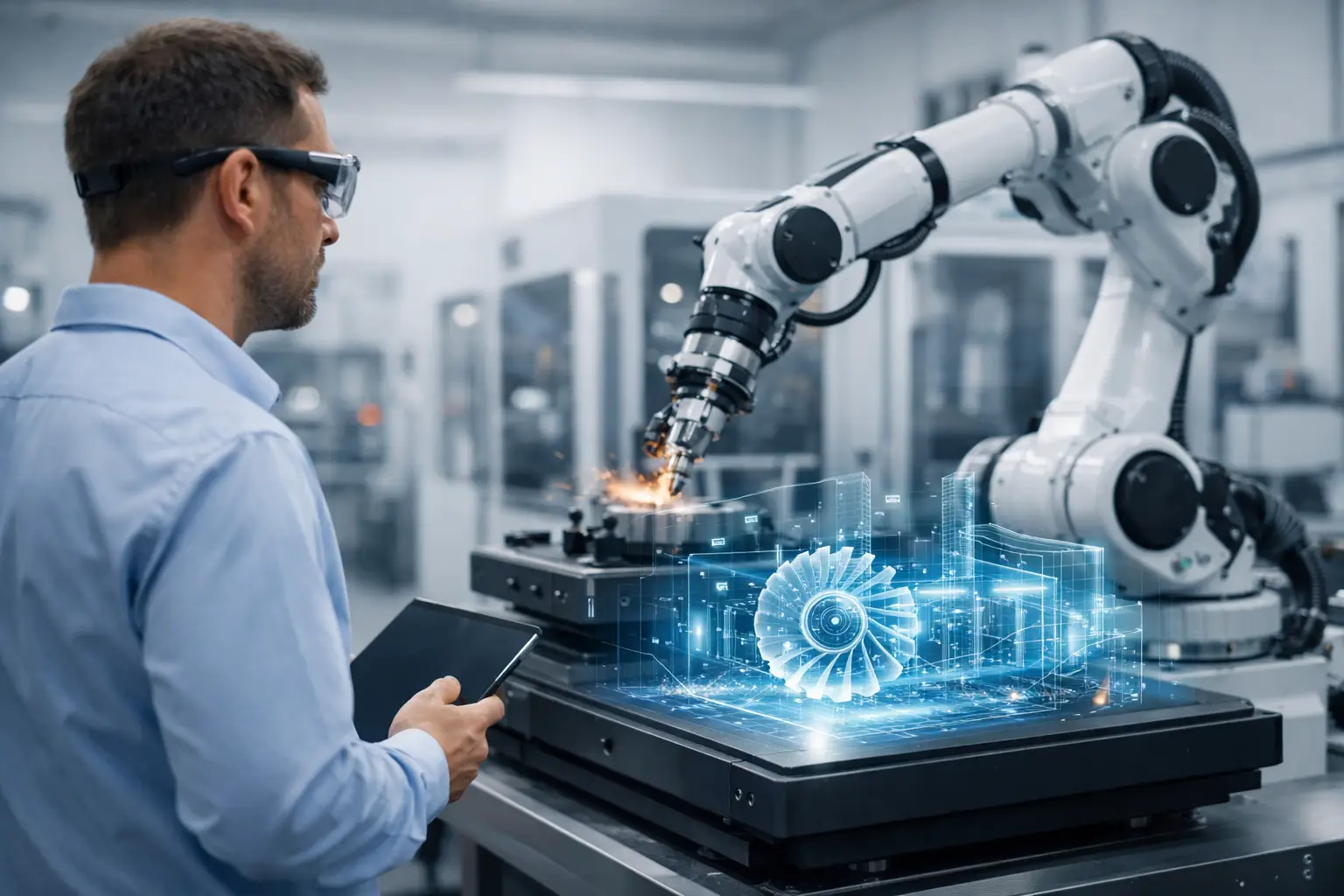
There is a tendency to treat digital manufacturing as another term for 3D printing. In practice, that view is too narrow. The future of digital manufacturing is a connected process where CAD data, scan data, simulation models, CNC strategies, additive methods and inspection results all inform one another.
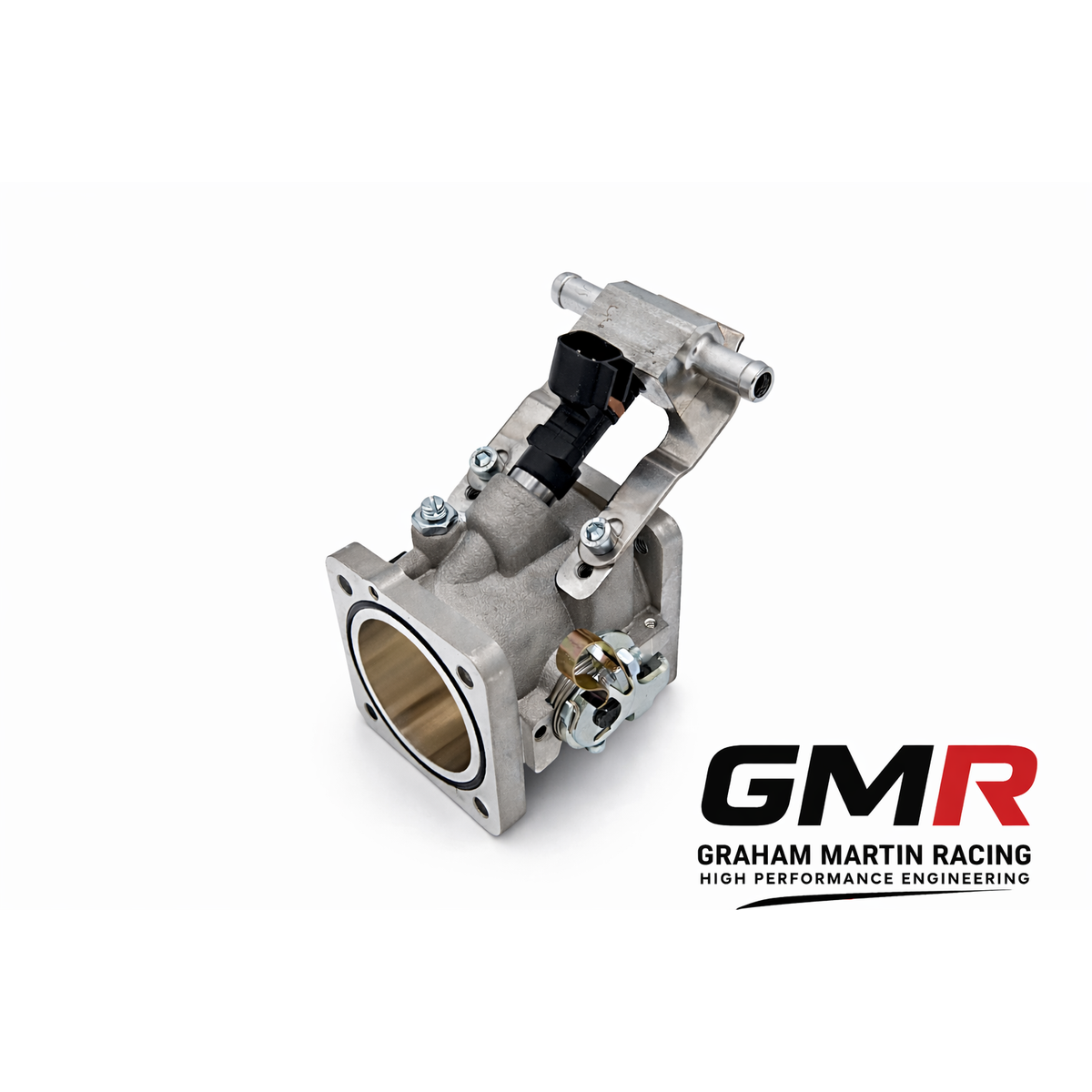
That matters because most motorsport components are not simple. An intake manifold has airflow targets, packaging constraints, wall thickness demands, injector placement requirements and serviceability considerations. A throttle body assembly must balance response, stiffness, weight, sealing, shaft control and integration with the wider fuel and induction package. Digital methods help manage those competing demands earlier and with more precision.
The next phase is not about one machine replacing another. It is about a more intelligent workflow. Design intent will move through the process with less loss, fewer manual handovers and better visibility of what is happening at each stage. When that works properly, revision control improves, quality becomes easier to verify and low-volume manufacture becomes commercially stronger.
Faster iteration without lowering standards
Speed is one of the clearest gains, but speed on its own is not the objective. In a serious engineering environment, faster only matters if the part still performs, fits and survives under load.
Digital manufacturing changes iteration by reducing the penalty of change. If a runner length needs adjusting, an injector angle needs refining or a plenum volume has to move to suit packaging, those revisions can be assessed and implemented with far less delay than in a traditional sequential process. That is especially valuable where development time is limited, such as pre-season testing, programme rescue work or prototype sign-off.
For low-volume and bespoke projects, this is a major advantage. Tooling investment can be kept under control in the early phase, while critical geometry is validated before committing to final production methods. In some cases, additive manufacture is the end solution. In others, it is a bridge to machined or cast production. The correct route depends on application, load case, quantity and material demands.
That trade-off is worth stating clearly. Additive manufacturing is not automatically the answer for every motorsport component. Surface finish, heat behaviour, post-processing time and material properties still matter. For some parts, a hybrid route combining additive development with precision machining gives a better outcome than forcing a single method onto the entire job.
The shift from prototype-first to data-first
One of the most important changes ahead is the move towards data-first development. Instead of building a part and discovering issues late, engineers can use digital tools to identify likely problems earlier – before material is cut.
This approach is already influencing airflow development, thermal management, packaging studies and structural refinement. For induction and fuel-system hardware, the quality of the starting model has a direct effect on the final result. Better scan data, cleaner CAD and more accurate simulation reduce the gap between the digital model and the real-world component.
That does not remove the need for physical testing. In motorsport, track conditions, vibration, heat soak, assembly tolerances and service loads still expose issues that no model captures perfectly. But the future of digital manufacturing is about reaching physical test with a stronger first part. That means fewer wasted cycles and more useful track or dyno time.
Low-volume production becomes more competitive
Mass production has always benefited from scale. Specialist performance engineering does not work that way. Many high-value projects sit in the difficult middle ground – volumes too low for conventional production efficiency, but expectations too high for rough prototype methods.
This is where digital manufacturing has serious value. It makes low-volume production more repeatable and less dependent on workaround-heavy manual processes. Once the digital thread is well managed, the same dataset can support a one-off race component, a pilot batch for vehicle development or a short production run for specialist customers.
That improves consistency. It also improves confidence for buyers who need more than a promising concept. They need evidence that the tenth part will match the first, that fitment will remain controlled and that engineering intent will survive the production process.
For UK-based engineering businesses, this also strengthens local manufacture. Digital workflows reduce some of the cost penalties traditionally associated with specialist domestic production. They do not remove them entirely, but they make rapid, high-specification work more viable where responsiveness and control matter more than headline unit price.
Inspection, traceability and quality control will matter more
As digital manufacturing matures, quality control will become more integrated rather than something checked only at the end. Scan comparison, in-process measurement and digital inspection records will play a larger role, particularly for safety-critical or high-load components.
For motorsport and performance applications, that is significant. A component can look correct and still be wrong in ways that matter – wall thickness variation, positional error, distortion after heat treatment or drift from the original CAD intent. Digital inspection helps detect these issues earlier.
Traceability also becomes stronger when design revisions, machine data and inspection outcomes are linked properly. That is useful not just for compliance or customer reporting, but for improving the next iteration. A disciplined feedback loop is one of the strongest advantages of a digital manufacturing environment.
Automation will support specialists, not replace them
There is often too much noise around automation replacing engineering judgement. In this sector, that is an oversimplification. Automation will remove repetitive tasks, improve consistency and reduce avoidable delays. It will not replace the need for experienced engineers who understand airflow behaviour, assembly realities, material choice and race-use failure modes.
If anything, the value of specialist knowledge increases as tools become more capable. Better software and smarter machines can produce poor results very efficiently if the engineering decisions are weak. The businesses that gain most from digital manufacturing will be the ones combining advanced process control with real application knowledge.
That is particularly true where packaging is tight and performance margins are small. A motorsport intake system is not judged by how impressive the model looked on a screen. It is judged by fit, response, durability and measurable output.
Why the future of digital manufacturing favours specialist partners
As the process becomes more integrated, customers will increasingly favour suppliers who can manage multiple stages under one roof or within one tightly controlled engineering workflow. That reduces delays, limits interpretation errors and keeps accountability clear.
For a customer developing a bespoke induction package, for example, the strongest outcome often comes from having design, prototyping, machining and validation aligned from the start. The same applies to confidential OEM or race projects where timing, control and technical accuracy are non-negotiable.
This is where a specialist engineering partner has a clear advantage over fragmented supply chains. GMR operates in exactly that space – moving from concept through prototype to low-volume manufacture with motorsport discipline and direct technical control. That model is increasingly aligned with where the market is heading.
The competitive edge will come from execution
The future of digital manufacturing is not a software trend or a machine catalogue. It is a competitive shift in how performance parts are conceived, refined and delivered. The winners will not be those who simply adopt more digital tools. They will be the ones who use them with discipline, select the right process for the job and keep engineering quality ahead of speed for its own sake.
For race teams, engine builders and serious performance programmes, that should be the real point of focus. Digital manufacturing is valuable when it produces a better part, faster, with fewer compromises and greater confidence in the result. When that standard is met, development moves quicker, production becomes more reliable and engineering decisions carry less risk.
The useful question is not whether digital manufacturing is the future. It is whether your current process is ready for the level of speed, precision and control that future will demand.
Related: What Is Digital Manufacturing? A Practical Guide for Makers
Related: From Prototype to Production: How 3D Printing Became a Real Manufacturing Method