A faster lap time rarely comes from a single part. More often, it comes from a system that has been designed, tested and calibrated to work as one. That is the simplest way to answer the question what is performance engineering. It is the disciplined process of improving how a vehicle, engine or component performs under real operating load, with decisions driven by data, packaging, durability and application rather than guesswork.
In the performance and motorsport world, the term is often used loosely. Some use it to describe any aftermarket upgrade. Others treat it as a catch-all for tuning. In practice, performance engineering is far more exacting. It sits between pure design, manufacturing and calibration. Its job is to turn a target – more power, sharper throttle response, lower mass, better thermal control, improved reliability – into a repeatable engineering result.
What is performance engineering in practice?
Performance engineering is the development of components, systems and calibrations that improve measurable performance without losing sight of constraints. Those constraints might be engine bay space, fuel demand, intake tract length, heat rejection, serviceability, class regulations, production cost or required lifespan.
That matters because performance is never just about peak output. A race engine that makes more power for two laps before temperatures run away is not a better engine. An induction system that flows well on paper but creates poor drivability out of slower corners is not a complete solution. Real performance engineering balances output with response, control, packaging and endurance.
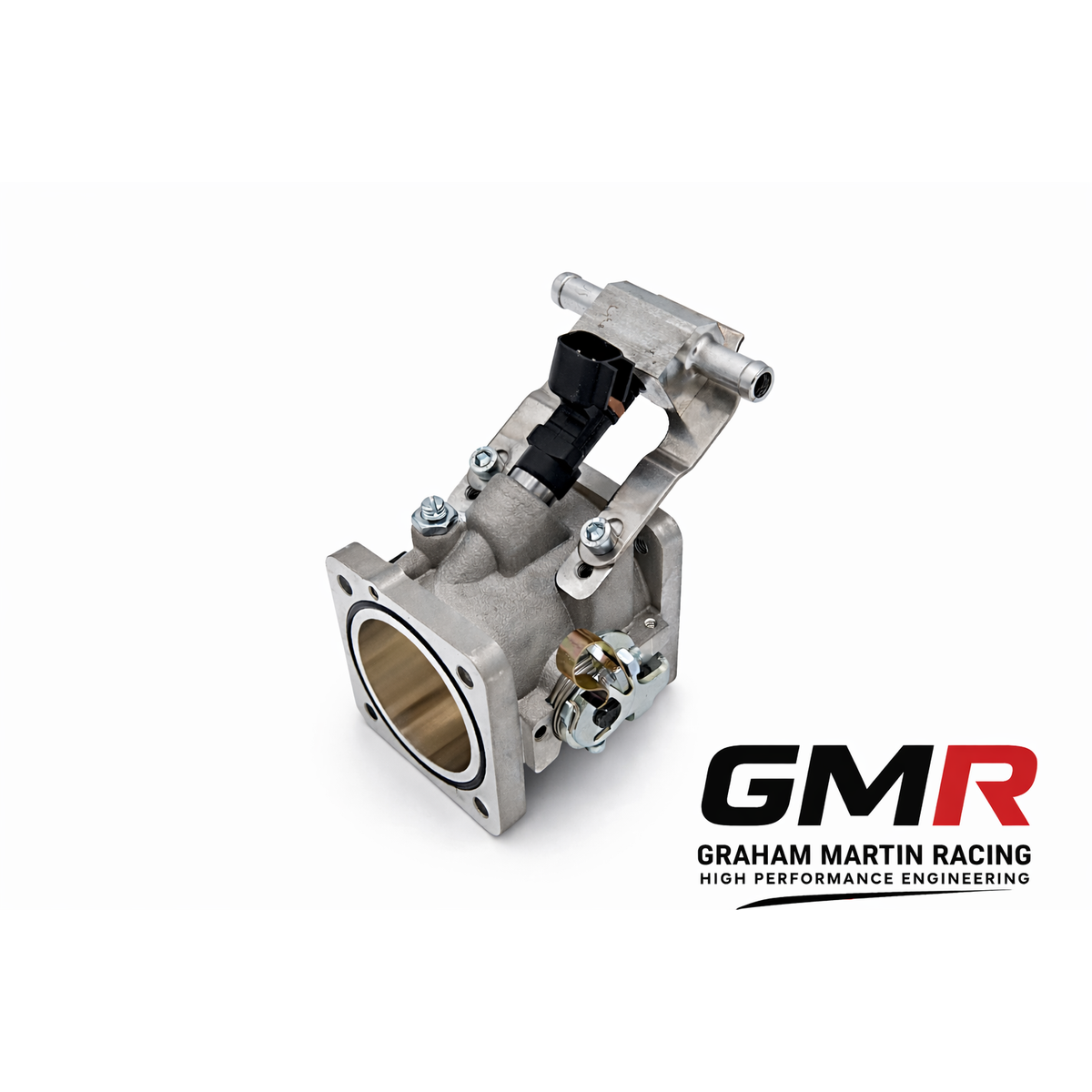
At component level, that could mean redesigning a throttle body arrangement to improve airflow and progression. At vehicle level, it might involve matching intake geometry, injector sizing, fuel delivery, sensor strategy and ECU calibration so the engine behaves correctly across the full operating range. At programme level, it can mean moving from concept to prototype to low-volume manufacture with tolerances and repeatability suitable for competition use.
Performance engineering versus tuning
Tuning and performance engineering overlap, but they are not the same thing. Tuning often focuses on adjustment – ignition timing, fuelling, cam control, boost targets or throttle mapping. Performance engineering starts earlier. It asks whether the hardware, airflow path, fuel system, thermal margin and control strategy are fundamentally capable of meeting the target.
A calibrator can only work with the hardware in front of them. If the injector placement is poor, the plenum volume is wrong for the application, or the throttle arrangement causes unstable airflow, no amount of clever calibration will fully correct it. Equally, excellent hardware without proper mapping leaves performance on the table. The strongest results come when design, manufacture and calibration are treated as a single engineering problem.
That distinction is especially relevant in motorsport and serious road applications. Bolt-on parts can produce gains, but engineered systems produce dependable gains. They do it with fewer compromises and a clearer understanding of why the result has been achieved.
The core disciplines behind performance engineering
Performance engineering is not one skill. It is a combination of fluid dynamics, combustion understanding, mechanical design, manufacturing knowledge, data analysis and calibration. The best work happens when these disciplines inform each other early rather than late.
Airflow is usually one of the first priorities. Intake path shape, taper, surface finish, runner length, bellmouth design and plenum behaviour all affect cylinder filling, throttle response and power delivery. A high-flow figure alone is not enough. Air must arrive consistently and with the right characteristics for the engine speed range and intended use.
Fuel delivery is just as critical. Injector size, spray pattern, targeting, rail design and pressure stability influence both performance and control. A system built for a dyno headline figure may behave poorly in transient conditions if the injector strategy is wrong. On track, that shows up quickly.
Then there is mechanical integrity. Parts must survive vibration, heat cycling, pressure variation and repeated service work. Lightweight design has value, but only if stiffness, sealing and durability remain where they need to be. In performance applications, every gain carries a cost somewhere else. Good engineering makes those trade-offs visible before they become failures.
Where the gains really come from
One of the biggest misconceptions is that performance engineering is always about chasing maximum power. In reality, the most valuable gains often come from areas that make the car or engine more effective as a package.
Throttle response is a good example. A sharper, cleaner response can transform corner exit behaviour and driver confidence even if peak power changes only modestly. Weight reduction matters too, but only when achieved in the right place and without compromising strength. Better packaging can shorten intake paths, improve service access or allow cleaner routing for fuel and electrical systems. Thermal management can protect consistency over a race distance. Reliability can be worth more than an extra few brake horsepower if it keeps the car running at full intent.
This is why application matters so much. A hillclimb car, endurance engine, track-day build and low-volume road programme may all have different definitions of success. The right engineering answer depends on duty cycle, target rpm range, available fuel, environmental conditions, budget and development time.
What is performance engineering if not a full system view?
At a serious level, what is performance engineering if not the management of interactions? Changing one part changes the behaviour of the whole system. A larger throttle body may improve top-end airflow, but it can also alter low-speed control. A different intake manifold may support better cylinder filling, but it may create packaging issues around the brake servo, bonnet clearance or injector angle. A lighter part may reduce mass, but introduce resonance or shorten service life.
This is why experienced engineering teams spend so much time on validation. CAD modelling, prototype manufacture, bench testing, dyno work and track evaluation all have a role. Each stage removes assumption and replaces it with evidence. The process is iterative by design. A first prototype proves direction. The next revision improves detail. Final production then depends on whether the design can be manufactured repeatedly to the required standard.
For specialist suppliers and motorsport partners, speed through that cycle is a competitive advantage. Rapid development only has value when paired with technical control. Otherwise, it is simply faster guesswork.
How performance engineering is applied to induction and fuel systems
Induction and fuel systems sit at the centre of many performance gains because they control how the engine breathes and how accurately it receives fuel. Changes here directly affect torque delivery, response, driveability and top-end power.
A well-engineered throttle body kit is not just a collection of parts. The throttle size, shaft design, progression, linkage geometry, runner entry and manifold layout all influence behaviour. So do practical factors such as sensor compatibility, injector fitment and installation tolerance. If any of those are wrong, the finished system may be difficult to calibrate or inconsistent in use.
The same applies to intake manifolds and air boxes. Volume, shape, length and feed arrangement need to suit the engine and the application. A circuit engine that spends its life at sustained load may need a different approach from a fast-road package that must cope with broader transient use and tighter packaging constraints.
This is where a company such as GMR operates most effectively – combining race-proven hardware, prototype capability, bespoke manufacture and calibration thinking so the final result is engineered as a package, not assembled as a compromise.
Why data matters more than opinion
Performance engineering has little patience for folklore. Sound engineering decisions come from measured airflow, pressure behaviour, lambda control, thermal data, dyno traces, material performance and in-vehicle feedback. Experience still matters, but experience is strongest when it helps interpret data rather than replace it.
That also means accepting that the best solution is not always the most extreme one. Bigger is not automatically better. More complex is not always faster. Sometimes the right answer is a cleaner manifold path, a better injector angle, a revised stack length or a calibration strategy that makes the hardware usable across the full load range.
For customers, this is often the difference between buying a part and investing in an outcome. The part matters. The engineering logic behind it matters more.
When do you need performance engineering?
You need performance engineering when the project has real targets and real consequences. That could be a race team trying to improve repeatable lap performance, an engine builder solving airflow and packaging limitations, or a low-volume vehicle programme that needs prototype parts developed quickly and confidentially.
It becomes especially valuable when off-the-shelf solutions stop fitting the brief. If the engine bay is tight, the platform is unusual, the power target is ambitious or the use case is severe, generic components start to create compromises. Bespoke engineering then stops being a luxury and becomes the sensible route.
The same applies when reliability and delivery matter as much as outright numbers. Competitive environments punish weak assumptions. Components need to fit, perform and survive. Development needs to move quickly, but not carelessly.
Performance engineering is not about adding noise, complexity or marketing claims to a build. It is about producing a measurable advantage through design discipline, manufacturing accuracy and calibration control. If the goal is stronger response, better airflow, cleaner integration, lower weight or greater durability, the process has to be engineered, not improvised.
That is where the real value sits. Not in chasing a headline figure, but in building a package that performs properly when it counts.