
2026-11-24
What Are Individual Throttle Bodies? A Proper Engineering Explanation
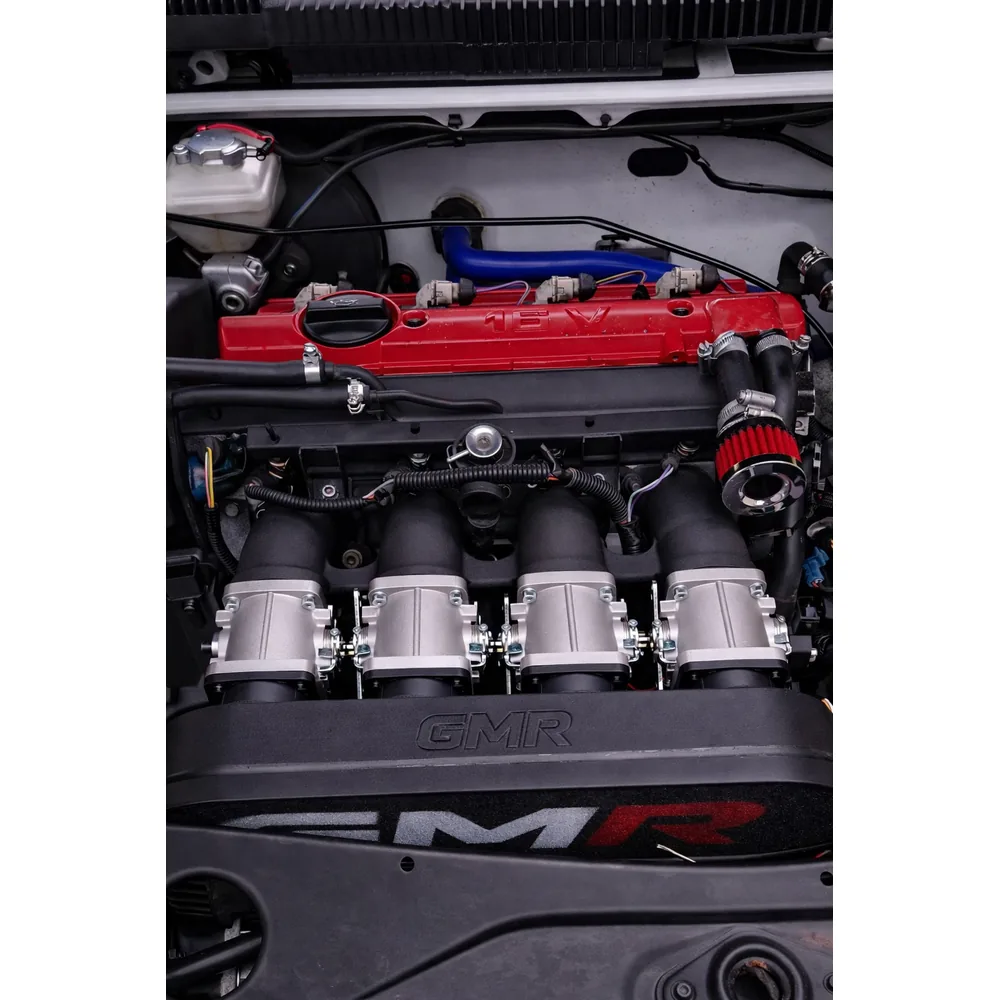
Individual throttle bodies (ITBs) give every cylinder its own throttle — one butterfly, one short intake tract, feeding one inlet port. Instead of the whole engine breathing through a single throttle and a shared plenum, a four-cylinder runs four throttles in sync, a six runs six, and so on. The throttle sits much closer to the inlet valve, each cylinder gets an equal-length path to its port, and the engine picks up the instant you move your foot. That is the headline, and the rest of this piece explains the mechanisms behind it — and the places where ITBs are genuinely the right tool, and the places where they are not.
You will see them called independent throttle bodies or multi throttle bodies (MTB) in some literature. It is all the same architecture: throttle-per-cylinder induction, which is why people also ask what are individual throttle bodies doing that a single throttle cannot. The answer is about airflow quality, latency and tuning freedom, not a magic power number.
How ITBs differ from a single throttle body
Most production engines breathe through one throttle body feeding a plenum, with runners branching off to each cylinder. When you crack the throttle, the plenum has to fill before any extra air reaches the cylinders. That filling takes time, and the air then travels a different distance to each port — so the cylinders are never quite breathing the same thing.
ITBs invert that. The throttle moves to within a few centimetres of the inlet valve, and any plenum or airbox now sits upstream of the throttles, staying full of air whether the throttle is open or shut. There is far less distance for the air to cover, so the engine responds sooner. Three things fall out of that geometry:
- Less restriction. The combined area of four, six or eight throttle bores is far greater than one central throttle, so the intake system chokes the engine less at full load.
- Equal, short paths. Every cylinder gets the same bore, the same length and — if the kit is built properly — the same airflow. That is a real engineering advantage, not a marketing line.
- Lower pumping losses at part throttle. Each cylinder throttles its own air directly, so the engine wastes less work breathing at cruise and light load.
The benefits — and where they actually apply
First, throttle response. This is the one you feel. The direct path removes the plenum-fill latency, so the engine answers your right foot immediately. On a car used hard on track or on the road, this is the single biggest reason to fit ITBs.
Second, part-throttle airflow and drivability. Lower pumping losses at partial throttle mean the engine breathes more freely at small openings. As an illustration — not a measured spec — an ITB setup can flow at a small throttle angle what a single throttle flows at a much larger one, which is why ITB cars feel so alert at cruise.
Third, idle on aggressive cams. A long-duration cam and a shared plenum fight each other: reversion pulses from each cylinder disturb the common plenum and upset the idle. Give each cylinder its own tract and most of that cross-talk disappears, so an ITB engine will often idle more cleanly on a lumpy cam than the same engine on a manifold. In practice the idle can be fussy to dial in — it needs careful Alpha-N calibration — but the mechanism is sound.
Fourth, cylinder-by-cylinder tuning. Same bore, same length, same airflow to every port means you can trim fuelling and timing per cylinder rather than compromising the whole map to protect the weakest one. For engine builders chasing repeatable results, this is where ITBs earn their keep.
Weight can also fall, and the induction note is unmistakable — the engines people remember for their sound, from the E46 M3 to the Ferrari F355, McLaren F1 and R32 Skyline GT-R, were all ITB engines.
Do ITBs make more power?
Be honest about this, because it is the question that sells people the wrong parts. On an otherwise-stock engine, peak-power gains from ITBs alone are modest. They do not conjure power; they remove artificial restriction and latency and let the engine's inherent breathing show through. The gain is largest when you are replacing a genuinely restrictive factory intake — strip off a choked OEM plastic manifold and the difference is obvious. Swap out a single-throttle manifold that was already designed for performance and the peak-power delta narrows.
And here is the balanced view: a well-sized single throttle body with a properly tuned plenum can match, and in some competition cases beat, ITBs on peak power, because a large plenum stores energy and supports resonance tuning across the range. ITBs win on response, part-throttle behaviour and per-cylinder control. Choose the tool the engine and the application call for — I will tell you when a separate tuned manifold is the better answer for your combination. If you want the deeper read on individual throttle body selection and tuning, our K20 ITB guide and Zetec ITB guide go through it engine-by-engine.
Sizing the bore: smaller than you think
The most expensive ITB mistake is oversizing. A bigger bore flows more air, but it drops intake velocity — and velocity is what fills the mid-range and sharpens throttle response. Put 52 mm bodies on a mild 1.8 and you will make power only at the top, with the bottom and midrange falling away as charge velocity collapses at low RPM. For a given mass flow, a smaller bore keeps velocity high, which strengthens the pressure-wave tuning that builds torque. Small, high-revving engines with high specific output are far more sensitive to bore than big, lazy, low-revving ones.
Some real starting points to anchor the decision:
| Source / method | Bore | Suits |
|---|---|---|
| AT Power (100 mm extensions, 40 mm ram pipes) | 45 mm | up to ~250 hp |
| AT Power | 50 mm | ~250–350 hp |
| AT Power | 55 mm | 350 hp+ |
| Graham Bell, Four Stroke Performance Tuning | 52 mm | 60–77 hp/cyl |
| Graham Bell | 56 mm | 70–87 hp/cyl |
| Graham Bell | 62 mm | 80–98 hp/cyl |
Round bores from UK makers typically come in 38, 40, 42, 45, 48, 50, 52 and 55 mm. The bore should relate to the runner and port — harmonise the throttle-body ID with the intake runner length and ID, don't pick a headline number in isolation. One workable rule of thumb: size the runner for the engine, then add roughly 20% for the throttle bore. Treat it as a start point, then prove it on the dyno.
Runner and trumpet length: the real tuning lever
Bore gets the attention, but inlet length is where you move the power. The total intake tract — extension (runner) plus ram pipe (trumpet) — tunes a pressure wave. Each intake event sends a pulse up the tract; it reflects off the open end and, if its timing lines up with the valve event, it arrives back to pack extra charge into the cylinder. Longer overall length moves that resonance peak down the rev range and builds low-end torque; shorter length moves it up and favours top-end.
Measure it properly: the tuned length runs from the back of the intake valve all the way to the radiused mouth of the stack — not just the trumpet. A rough starting formula, which we use in-house as a first cut:
84,000 ÷ tuned RPM = runner length in inches
Most road engines run 2nd-harmonic tuning, which gives strong torque without absurdly long runners. Air temperature matters too: hotter air raises the speed of sound and shifts the ideal length, so heat management is part of intake tuning, not separate from it. And fit the stack flush — a trumpet that doesn't sit true at the throttle face leaves a step, and a step trips the flow. (Note the terminology: the US "velocity stack" is the UK "extension" — commonly 70, 100 or 130 mm — plus the ram pipe on the end.) There is more on tract length and choke sizing in our DCOE spec guide.
Where printed carbon composite earns its place
The runners, transitions and airbox around the throttles are as much a part of the system as the bodies themselves — and this is where manufacturing route matters. GMR prints its intake manifolds and airboxes as carbon composite parts in PPA-CF (carbon-fibre reinforced polyphthalamide), by direct digital manufacturing (DDM): printed carbon composite, no moulds. That route does things a laminated or machined part cannot:
- Hollow, closed internal geometry. Tuned-length runners, smooth internal transitions and trapped-air cavities can be built into one piece — shapes you simply cannot hand-laminate or machine solid.
- Thermal insulation. A reinforced polymer wall plus a trapped-air cavity picks up far less heat than aluminium (density 2.70 g/cm³, thermal conductivity 150–220 W/m·K — orders of magnitude higher than a polymer). That keeps intake-charge temperature down where it matters: at idle and under heat-soak in traffic. Flagging it honestly — at sustained wide-open throttle the benefit narrows, because fresh air is moving through constantly.
- Light. PPA-CF is 1.25 g/cm³, under half aluminium's 2.70 g/cm³ before the hollow section is even counted.
- Engine-specific, genuinely port-matched. No universal-fit compromise, and rapid CAD-to-dyno iteration so the geometry is optimised on real data.
On heat capability, don't read the 85°C glass transition as a ceiling. PPA-CF is semi-crystalline and fibre-reinforced, so load-bearing capability persists well above Tg — which is why its heat deflection temperature is 196°C at 1.8 MPa (227°C at 0.45 MPa) and its Vicat softening point is 232°C. Under-bonnet, HDT is the number that matters. Where a part sees very high sustained temperature, or where load runs along the print's Z axis (tensile 57 MPa in Z against 168 MPa in XY), a laminated/autoclave composite can be the right call — orientation and application decide it, and I will tell you which applies to your build. Parts are coated internally for sealing and inspection.
The ECU: the part people underestimate
ITBs live or die on calibration, and most factory ECUs cannot run them. The reason is load sensing. Speed-density (MAP-based) mapping relies on a stable manifold-pressure signal — and behind ITBs there is no shared plenum to damp the pulses, so MAP sits low and swings wildly at idle and with every throttle movement. It is noise, not signal.
The answer is Alpha-N: use throttle angle (alpha) and engine speed (n) as the load axes, with the throttle position sensor as the primary index. For a naturally-aspirated ITB engine, Alpha-N is effectively the only sensible route. For the best of both on a road car, many standalone ECUs blend the two — MAP at low RPM and small openings, switching to TPS at higher RPM and larger openings. Even on pure Alpha-N, keep a MAP sensor fitted for barometric correction, or the map has no way to compensate for changes in air pressure or altitude.
Two caveats worth stating plainly:
- A standalone or aftermarket ECU (K-Pro, Haltech, MoTeC, Link and the like) is not optional — it is part of the cost of doing ITBs properly.
- If the engine is turbocharged, you still need MAP/speed-density to account for boost. Alpha-N is a naturally-aspirated solution; forced induction runs a hybrid.
Calibration is the half of the job that decides whether ITBs feel brilliant or broken. GMR offers ECU mapping and calibration, including on a rolling road, for exactly this reason.
Frequently asked questions
Do individual throttle bodies need a plenum or airbox?
Not strictly, but a shared airbox upstream of the throttles helps: it feeds every body from a common, settled volume of air, supports barometric and filtration needs, and can be tuned to add a little resonance effect. On ITBs the airbox sits upstream of the throttles, so it stays full whether you're on or off the throttle.
Will ITBs pass an emissions or MOT test?
That depends on your market and how the car is mapped, not on the hardware itself. A well-calibrated ITB engine can idle and run cleanly, but legality for road use varies by jurisdiction and by what the vehicle was type-approved with — check your local rules before committing.
Can I reuse my factory ECU with ITBs?
Almost never. Factory ECUs rarely support Alpha-N or blended load sensing, and the unstable MAP signal behind ITBs breaks speed-density mapping. Plan for standalone or aftermarket management from the outset.
Are bigger throttle bodies always better?
No — oversizing is the most common ITB mistake. Too large a bore drops intake velocity and hollows out the mid-range and throttle response. Size the bore to the engine's airflow and runner geometry, not to the biggest number that will bolt on.
The short version
Individual throttle bodies put a throttle on every cylinder, through an equal-length, low-restriction path, for sharper response, better part-throttle breathing and per-cylinder tuning freedom. They are not a bolt-on peak-power miracle, and a tuned single-throttle manifold can beat them on top-end in the right case. Get the three things right — bore sized for velocity, tract length tuned for your rev range, and an ECU running Alpha-N or a blend — and they transform how an engine drives. For an engine we don't already list a kit for, we build custom ITB kits, manifolds and airboxes to order, engineered around your combination rather than adapted from a shelf.