
2026-11-15
OMEX Engine Management Kit for the Ford Duratec: What You Get, What It Makes, and Where It Needs Mapping
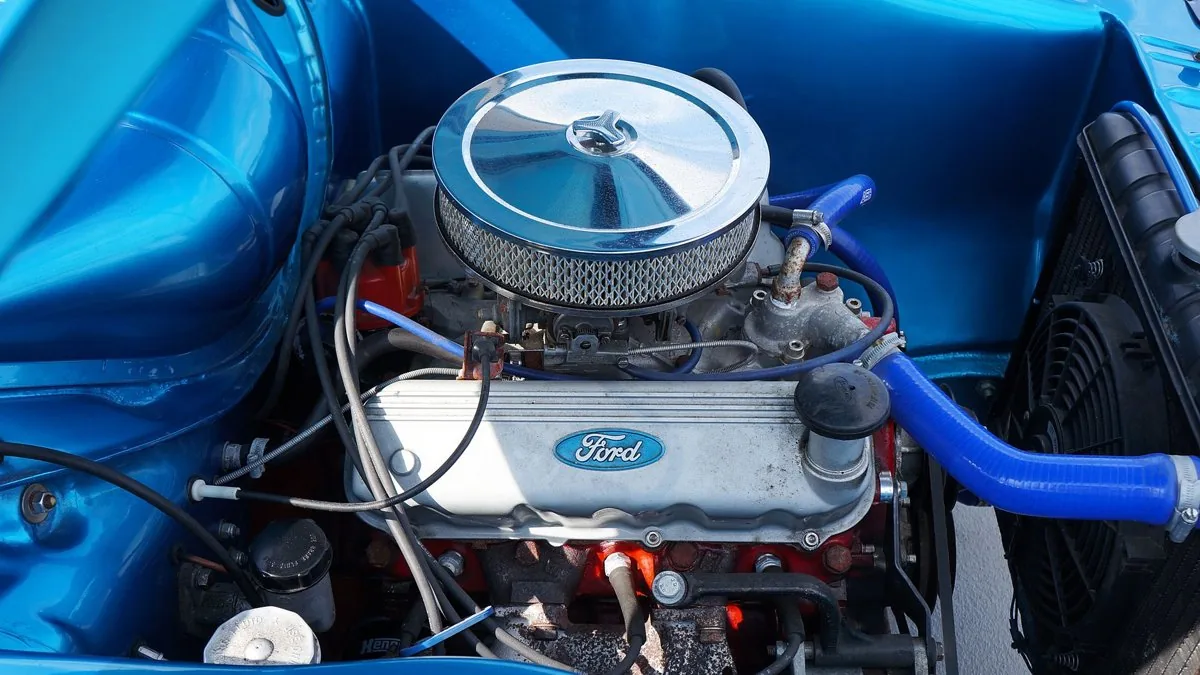
An OMEX engine management kit for the Ford Duratec (supplier reference OMEK012, superseding OMEK010) is a pre-assembled individual throttle body conversion built around a ready-mapped OMEX 600 series ECU and 45 mm Jenvey throttle bodies. Fit it to a standard 2.0-litre Duratec HE with a decent 4-1 manifold and you should see between 170 and 185 bhp at the flywheel, depending almost entirely on your exhaust design. It arrives clipped together — inlet manifold, bodies, fuel rail, injectors and air horns as one unit — so the mechanical install is fast. The part people get wrong is the ignition specification and the assumption that "ready-mapped" means "finished". Neither is true, and both are worth understanding before you spend the better part of £2,900.
This guide breaks down exactly what is in the kit, what the ECU can and cannot do, the ignition limitation that catches people out, and when the supplied calibration is enough versus when you need dyno time.
The engine you're fitting it to: Duratec HE, not Zetec
The relevant unit is the Ford Duratec HE inline-four, a chain-driven DOHC 16-valve engine offered in 2.0, 2.3 and 2.5-litre capacities. It is derived from the Mazda L-series — Ford holds a licence to develop L-series-based engines in perpetuity — and it has become one of the default choices for kit cars and club builds.
It looks like a Zetec, and that resemblance causes trouble. There are real differences: the Duratec runs chain-driven cams rather than the Zetec's belt, and the induction and exhaust sides are swapped relative to the Zetec. In a rear-wheel-drive kit car the engine has to be turned round, with redirecting water manifolds, a suitable sump and a bellhousing to mate it to a Ford-type RWD gearbox — in standard form it doesn't comply with the classic Ford bolt pattern. If you're coming from a Zetec build, don't assume your intake and loom geometry carries over. It doesn't.
| Capacity | Bore × stroke | Compression | Rod length (OEM) | Firing order |
|---|---|---|---|---|
| 2.0L | 87.5 × 83.1 mm | 10:1 (app-dependent) | 146.25 mm | 1-3-4-2 |
| 2.3L | 87.5 × 94.0 mm | ~10.8:1 (OEM, varies) | 154.75 mm | 1-3-4-2 |
One caveat on compression: published figures conflict. Wikipedia lists 10:1 for the 2.0, while forged-piston suppliers quote 10.8:1 as the OEM figure. The real number varies by application and model year, so measure yours rather than trusting a spec sheet when you're near a knock threshold. Hot oil pressure on the 2.3 sits at 29–39 psi (200–268 kPa) at 2,000 rpm — a useful sanity check before you load a freshly built engine on the dyno.
What's actually in the OMEX Duratec kit (OMEK012)
This is a comprehensive, pre-assembled package rather than a box of parts. The inlet manifold, 45 mm throttle bodies, fuel rail, Bosch injectors, air horns and throttle position sensor come built together, ready to bolt to the cylinder head.
| Included | Not included |
|---|---|
| Inlet manifold | Ignition coil / coil pack |
| 45 mm throttle bodies | Fuel pressure regulator |
| Single-cable linkage (top LH mounted) | Fuel pump |
| Fuel rail + Bosch injectors | |
| Air horns | |
| Head injector-port bungs | |
| Throttle position + air temp sensors | |
| Ready-mapped 600 series ECU | |
| Ready-built wiring harness, instructions, software |
The injector-port bungs are worth understanding rather than just fitting. The Duratec head has its original injector pockets below the ports; the bungs block those off so the new injectors can sit in the throttle bodies instead. That isn't a packaging convenience — spraying further upstream gives more length for the fuel to atomise and mix with the incoming air before it reaches the valve, which is better for mixture distribution across the rev range.
Budget for the omissions. The kit does not supply a coil, regulator or fuel pump, and those are not optional extras you can skip — they're how the engine makes spark and fuel. Pricing is indicative and moves about: the full OMEK012 has listed around £2,898 inc VAT at Burton Power, with the standalone OMEM600 ECU at £792.00 inc VAT (£660.00 ex VAT). Verify current pricing before you commit.
Power: what the 45 mm kit makes, and when you've outgrown it
On a standard 2.0 Duratec with a 4-1 exhaust, expect 170–185 bhp. The spread is almost entirely down to the exhaust — primary length, collector design and backpressure move the number more than anything else on an otherwise standard engine. This lines up with what other well-sorted ITB setups achieve on the same base engine: a healthy 2.0 as fitted to the Fiesta ST150 typically sees around 180 bhp with ITBs, management and a free-flowing exhaust.
The 45 mm butterfly is the standard size, and it's the right size for this power band. Larger bodies are available for genuinely high-output builds, but fitting oversized throttles to a mild engine costs you throttle resolution and low-lift airspeed — the mixture-carrying velocity that keeps fuelling stable off-idle and part-throttle. Don't reach for bigger bodies unless the airflow demand actually calls for them.
Two thresholds to keep in view:
- Injector capacity: the supplied injectors suit a standard engine with this kit. Over roughly 190 bhp you'll want the optional higher-flowrate set of four.
- Bottom-end: it doesn't take much to push a Duratec to around 200 bhp, but at that point you should move to stronger rods and pistons before you trust it on track. If you're planning that route, our guide on choosing performance pistons, alloys and ring packs covers the material and clearance decisions that keep a tuned Duratec alive.
For context — and do not conflate these with the 45 mm kit — a 2.5-litre Duratec on a 50 mm-bore Jenvey kit with 93 mm horns and a steel rail is capable of around 330 bhp. That's a different capacity and a different throttle size; the 45 mm OMEX kit is a 2.0/2.3 solution.
The OMEX 600 series ECU (OMEM600): the brain of the kit
The ECU supplied is a proper multi-fit motorsport unit, not a piggyback. It's cross-compatible with Ford Crossflow (Kent), CVH, DOHC 8v/16v RS2000, Duratec HE, Lotus Twin Cam, Pre-Crossflow, SOHC (Pinto) and Zetec E, and it replaces the earlier OMEM500/550. Under 400 g in a high-strength aluminium case, with all ignition drivers inbuilt and a 12,750 rpm maximum recommended engine speed.
Fuelling
The 600 has two injector outputs driving four injectors semi-sequentially — timed injection referenced to inlet valve timing, with injectors paired by the cylinders that reach TDC together. On a standard I4 firing 1-3-4-2, that means 1+4 as one pair and 2+3 as the other. Use high-impedance injectors (≈12 Ω across the terminals). Low-impedance injectors (≈3 Ω) can be run with ballast resistors, but OMEX advises against it — it isn't always successful, and it's an avoidable failure point on an otherwise clean install.
Ignition
Two amplified coil outputs give you either single-coil-with-distributor or four-cylinder distributorless (DIS wasted spark) ignition — typically a single pack of two double-ended coils with four HT leads straight off it. The ignition drivers are inside the ECU, which is one less external module to fail. The unit supports distributorless ignition up to four cylinders and single-coil ignition up to eight, including turbocharged engines.
Inputs, outputs and load sensing
Inputs cover engine position and speed (magnetic or Hall-effect crank sensors, with automatic interpolation between mapped sites), TPS, MAP, coolant temp and air temp. The ECU reads load from either throttle position or manifold absolute pressure — alpha-N or speed-density — which matters on ITBs, where MAP signal is noisy at idle and TPS-based load is often the more stable reference. Dedicated outputs handle the ignition coil, shift lights, tacho and datalogging, plus there are three auxiliary inputs (anti-lag, full-throttle gearshift and similar) and four auxiliary outputs you assign as needed.
One wiring gotcha: the first radiator fan has a dedicated output pin, but a second (bay) fan does not — you wire it to one of the auxiliary outputs. Plan that before you build the loom, not after.
The full feature list is deep for the money: turbo wastegate and anti-lag control, variable cam control, launch control, narrow- and wideband lambda, knock sensing, full-throttle gearchange, intercooler water-spray and water-injection control, nitrous ignition retard and fuel enrichment, independent fuel and ignition rev limiters, and barometric compensation with an external sensor. Programming is via the MAP3000 Windows software.
The ignition limitation that catches people out
Read this before you order. The standard OMEK012 kit is not designed for coil-per-plug (coil-on-plug) ignition. Out of the box it runs DIS wasted spark. If you want the 2.0's factory coil-on-plug setup, you have two routes: OMEX can supply a DIS coil pack to run with the standard kit, or you specify the coil-per-plug ECU and harness upgrade (or a kit built around the OMEX 710 ECU). This is not a minor detail — turning up with a loom and coils that don't match the ECU's ignition strategy is the single most common way to stall a Duratec ITB build. Decide your ignition type up front.
Available upgrades at a glance
- Radiator fan control relay and base
- Push-on to screw-on fuel rail and pressure regulator upgrade
- Barometric pressure sensor upgrade (requires harness modification)
- Throttle position sensor upgrade
- Coil-per-plug ECU and harness upgrade
- High-flowrate injectors for engines over 190 bhp (set of 4)
- Long or short throttle body (air horn) variants
"Ready-mapped" is a starting point, not the finished job
The kit ships with a calibration that will run a standard 2.0L engine with a 4-1 exhaust — enough to start, idle and drive. That is genuinely useful: you get the car running with no fuss. But a generic base map cannot know your exact exhaust, your compression, your fuel or your ambient conditions. The moment you deviate — a modified engine, a 2.3L, different cams, a different manifold — you need the ECU mapped properly. Even on a bog-standard 2.0, a session on a dyno or rolling road is what turns "runs" into "makes the power it should and survives".
This is where the base map earns its keep and no further. Calibration is the difference between a safe mixture under heat-soak and a lean spike at the top of third gear. We do this work in-house — our breakdown of the calibration process that actually makes power explains what a proper mapping session involves rather than just "add fuel until it stops knocking". If you're building the loom yourself, our notes on a motorsport wiring loom that survives are worth reading before you crimp the first terminal — the supplied OMEX harness is fully tagged and clip-on, but any auxiliary wiring you add should be built to the same standard.
OMEX kit vs a bike throttle body conversion: which route?
The OMEX package is the convenient, standalone-ECU route with car-type Jenvey bodies and a known power band. It is not the only way to get ITBs onto a Duratec. A bike throttle body conversion can offer different airflow characteristics and packaging, and it opens up intake geometry choices — runner length, trumpet profile and plenum design — that a fixed car-TB kit simply doesn't.
That intake geometry is where we spend our engineering effort. Where a build calls for it, we design and manufacture printed carbon composite intake parts — airboxes, velocity stacks and manifolds — in PPA-CF (carbon-fibre-reinforced polyphthalamide). Our process — direct digital manufacturing (DDM): printed carbon composite, no moulds — lets us build hollow, closed internal cavities with tuned-length runners and internal transitions that can't be laminated or machined in one piece, then iterate from CAD to dyno on real data rather than guesswork.
There's a thermal argument too. PPA-CF has a density of 1.25 g/cm³ — under half aluminium's 2.70 g/cm³ before you count the hollow section — and a reinforced polymer wall plus a trapped-air cavity picks up far less heat into the intake charge than aluminium, whose thermal conductivity is 150–220 W/m·K. That benefit is strongest at idle and heat-soak, less so at sustained wide-open throttle, so I'll always tell you honestly which case applies to your build. And on the material limit that matters under the bonnet: PPA-CF's heat deflection temperature is 196°C at 1.8 MPa and 227°C at 0.45 MPa, with a Vicat softening point of 232°C — load-bearing capability persists well above the 85°C glass transition because the material is semi-crystalline and fibre-reinforced. Where a build genuinely needs very high sustained temperature capability, or where Z-axis strength governs (PPA-CF Z tensile is 57 MPa against 168 MPa in XY, so print orientation matters), a laminated/autoclave part can be the right call — and I'll say so.
FAQ
How much power does the OMEX Duratec kit make?
A standard 2.0-litre Duratec with the 45 mm kit and a 4-1 exhaust makes 170–185 bhp at the flywheel, with exhaust design accounting for most of that spread. Over 190 bhp you'll need the optional higher-flowrate injectors, and past about 200 bhp you should uprate the rods and pistons.
Does the OMEX kit support coil-on-plug ignition?
No — the standard OMEK012 kit runs DIS wasted spark and is not designed for coil-per-plug coils. If you want coil-on-plug, specify the coil-per-plug ECU and harness upgrade (or a 710-based kit), or run the DIS coil pack OMEX can supply. Decide this before ordering.
Is the ready-mapped ECU enough, or do I still need a dyno?
The supplied map runs a standard 2.0L with a 4-1 exhaust so you can get the car going. Any modified engine, a 2.3L, different cams or a different exhaust requires custom mapping — and even a standard engine should be mapped on a dyno or rolling road to get the most from it safely.
What does the kit not include?
The ignition coil, fuel pressure regulator and fuel pump are not supplied. Factor those into your budget and your loom plan alongside the roughly £2,900 kit price.
Will my Zetec intake and loom carry over?
No. Despite the visual similarity, the Duratec has chain cams and its induction and exhaust sides are swapped relative to the Zetec. Intake geometry and loom routing are different, so plan for Duratec-specific parts.
Related: What Does a Velocity Stack Do? The Flow and Pressure-Wave Physics That Actually Make Power