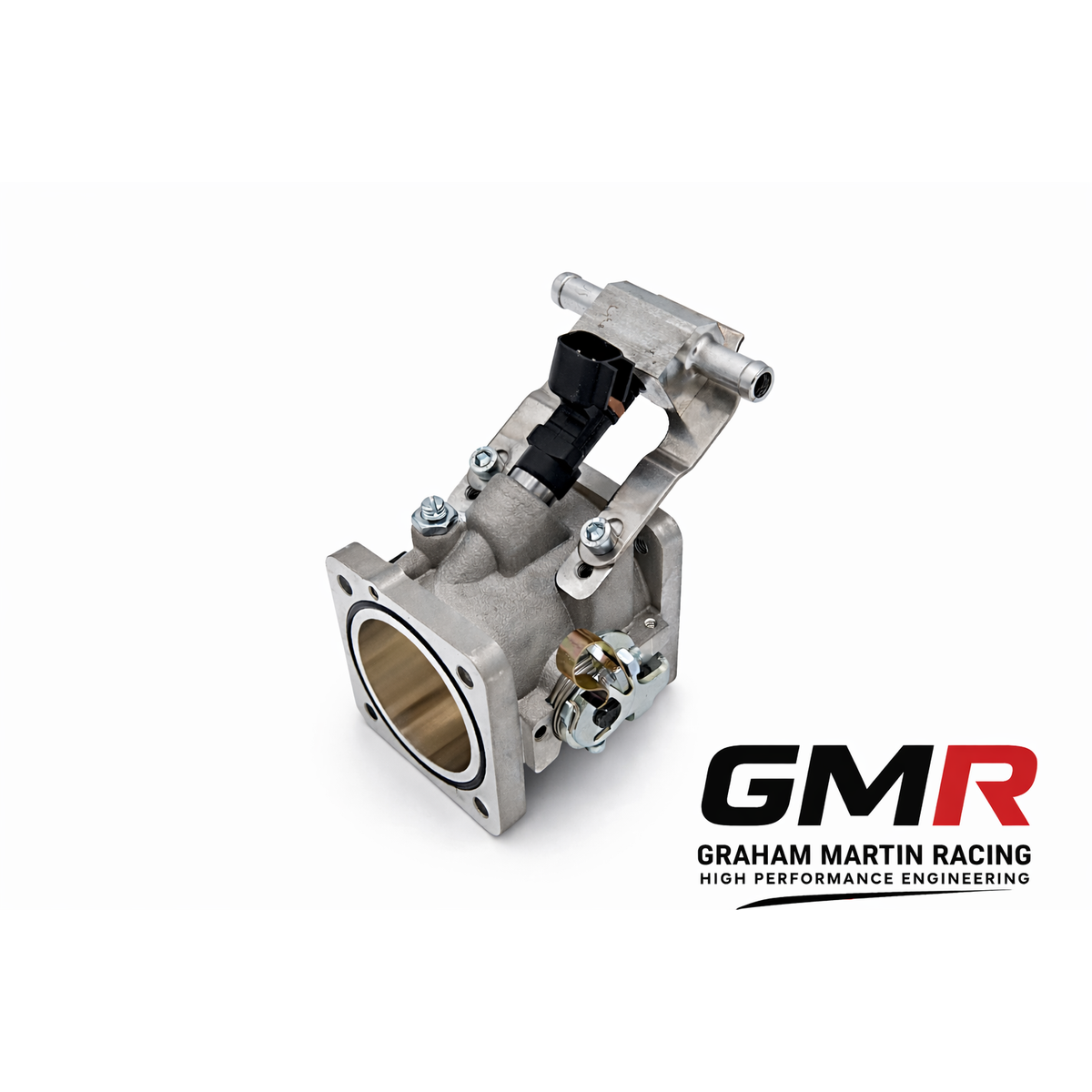
If you’ve searched for an individual throttle body kit honda k20, you’ve probably already waded through a sea of “universal fit” listings, vague power claims and bolt-on kits that ignore how the K-series actually breathes. I’m Graham Martin, and I build ITB systems for a living. So let me give you the engineering, not the marketing.
The Honda K20 is one of the best naturally aspirated four-cylinders ever put into a production car. A properly designed individual throttle body kit unlocks throttle response and top-end airflow that a single-throttle plenum simply can’t match — but only if the runner lengths, bore sizes, injector placement and tuning are matched to your engine, not to a spreadsheet average. That distinction is the whole game.
Why fit individual throttle bodies to a Honda K20?
A factory K20 intake is a compromise. One throttle body feeds a shared plenum, and the engine pulls against that single restriction through every intake stroke. ITBs give each cylinder its own throttle plate and its own runner, which changes the engine’s character in three measurable ways:
- Throttle response. With the throttle plate sitting just upstream of each port, there’s almost no plenum volume to fill or empty. The engine reacts to your right foot instantly — this is the single biggest “feel” change and it’s genuinely transformative on track.
- Top-end airflow. Remove the shared plenum restriction and the engine can keep filling the cylinders at high RPM. On a built K20 chasing 9,000 rpm and beyond, this is where the headline power lives.
- Tuning resolution. Individual runners and the option of per-cylinder trim give you a sharper, cleaner volumetric efficiency curve to calibrate against.
What ITBs are not is a free lunch. Done badly — wrong bore, wrong trumpet length, no thought given to filtration or fuelling — you can lose part-throttle drivability and even mid-range torque. That’s exactly why “close enough” doesn’t cut it on a K-series.
Bore size: bigger is not better
This is where most off-the-shelf kits go wrong. A 50mm throttle body bolted to a road-going K20Z looks impressive in a listing, but air velocity matters more than maximum cross-section. Too large a bore kills port velocity at the RPM you actually use, softening mid-range torque and making the car feel lazy until it’s screaming.
As a rough engineering guide for the K20:
- Standard-capacity, fast-road and club spec (up to ~250 bhp): 45–48mm bores keep velocity high and drivability sharp.
- Built engines, increased capacity, high-RPM race spec: 48–50mm earns its place once the engine genuinely flows enough to use it.
The right answer depends on capacity, cam profile, head work, target RPM and how the car is used. That’s the kind of decision-making that separates real performance engineering from parts-bin guesswork.
Runner and trumpet length — the tuning you can’t see
The velocity stack (trumpet) length and the overall runner length tune the resonant behaviour of the intake. Get it right and you get a useful ram-air effect that boosts cylinder filling across a chosen RPM band. Get it wrong and you’re leaving torque on the table.
Shorter stacks favour high-RPM power; longer stacks build mid-range. On a K20 destined for a sequential ‘box and a narrow power band, you tune the stacks to that band. On a road car that still has to pull from 3,000 rpm in traffic, you bias differently. This is why I’m wary of any kit sold without a conversation about the engine spec — the trumpet length is a design parameter, not a styling choice.
If a supplier can’t tell you why they chose a given bore and trumpet length for your combination, they’re selling you a guess.
Fuelling, injector placement and ITB hardware
An ITB conversion is also a fuel system conversion. The factory injector position and rail won’t carry over cleanly, so a serious kit addresses:
- Injector sizing and placement — correctly positioned, well-atomised injectors matched to your power target and fuel.
- Fuel rail and regulation — properly supported, leak-free, with sane fuel pressure control.
- Throttle linkage — a smooth, repeatable, properly balanced linkage so every throttle plate opens together. A poorly balanced linkage makes idle and part-throttle a nightmare to calibrate.
- Filtration — ITBs ingest a lot of air; running them naked on a race-prepped engine on track is a fast route to wear. Plan for a properly designed airbox or filtration to suit.
At GMR we manufacture our K20 ITB hardware — bodies, manifolds, stacks and airboxes — in the UK, including carbon composite and Direct Digital Manufactured parts, so the geometry is repeatable from one kit to the next. There’s more on why that manufacturing approach matters in our piece on the future of digital manufacturing.
The part everyone underestimates: calibration
I’ll be blunt — a Honda K20 ITB kit without proper calibration is half a job. ITBs change the airflow signal an ECU sees, particularly at idle and part-throttle, and the stock fuel and ignition maps were never written for them. Throttle bodies need a base map that understands MAP-based or Alpha-N strategies (or a sensible blend), correct throttle-plate idle bypass, and careful transient fuelling.
Done properly on a rolling road or engine dyno, a calibrated K20 on ITBs idles cleanly, drives smoothly off-boost, and makes the airflow gains real and repeatable. We offer bespoke calibration for both OEM and aftermarket ECUs precisely because the hardware and the map are one system, not two. If you want to understand the mindset, our overview of what high performance engineering teams do covers how design, manufacture and calibration tie together.
Off-the-shelf or bespoke?
Our off-the-shelf K20 ITB kits suit the common combinations — they’re engineered to fit and to perform, not cobbled from generic parts. But if you’re running an unusual capacity, exotic head work, an extreme RPM target, or tight engine-bay packaging, bespoke is the honest answer. We design the manifold, stacks and airbox around your engine and your car, then back it with calibration. That’s the route serious builders take when they want a result they can repeat, not just dyno once.
FAQ
How much power does an ITB kit add to a Honda K20?
On a largely standard K20, expect modest peak-power gains ~10% but a big improvement in throttle response and top-end feel. The real numbers come on built engines with cams and head work, where removing the plenum restriction can add meaningful top-end power — but only with correct bore sizing and calibration.
Do individual throttle bodies ruin drivability on a road car?
No — if they’re sized and tuned correctly. The bad reputation comes from oversized bores and stock maps. With sensible bore selection, balanced linkage and proper calibration, a K20 on ITBs can idle and drive cleanly enough for the road.
Do I need to retune after fitting ITBs?
Yes, always. ITBs change how the ECU reads load, so a fresh calibration is essential for clean idle, smooth part-throttle and safe full-load fuelling and ignition. Treat the hardware and the map as one job.
What throttle body bore should I run on a K20?
For fast-road and club spec up to roughly 250 bhp, 45–48mm keeps velocity and drivability sharp. Larger 48–50mm bores only pay off on genuinely high-flowing, high-RPM built engines. Match the bore to your spec, not to a listing.
Talk to someone who actually builds them
If you’re specifying an individual throttle body kit for your Honda K20, tell us about the engine — capacity, cams, head, target RPM and how the car’s used. We’ll spec bore, runner and trumpet length, fuelling and an airbox to suit, manufacture it in the UK, and calibrate it properly. Free UK delivery over £100. No universal-fit shortcuts.
Related: Individual Throttle Body Kit UK: How to Buy One That Actually Fits and Performs
Related: Performance Injectors for the Honda K20: A Sizing and Selection Guide That Won’t Waste Your Money