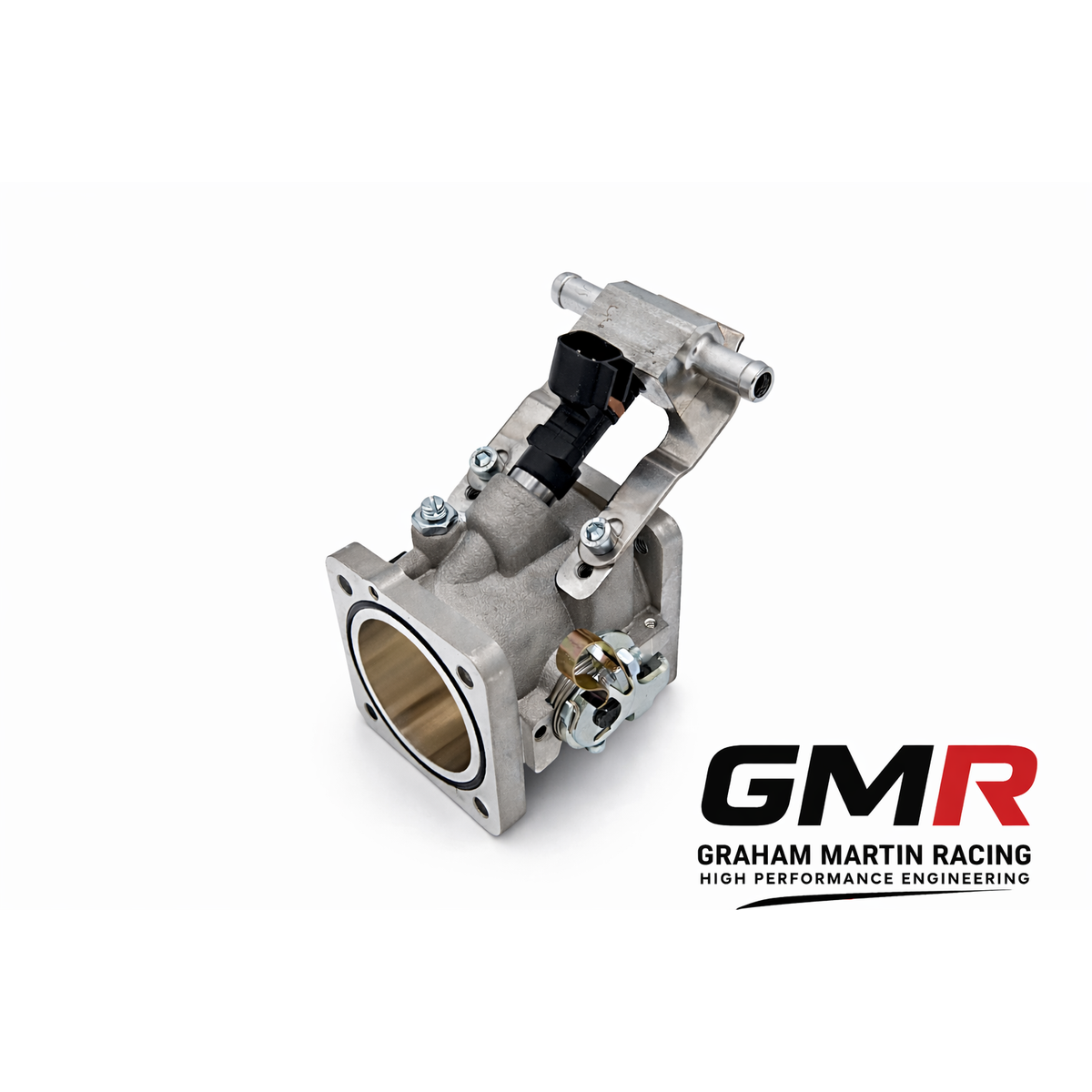
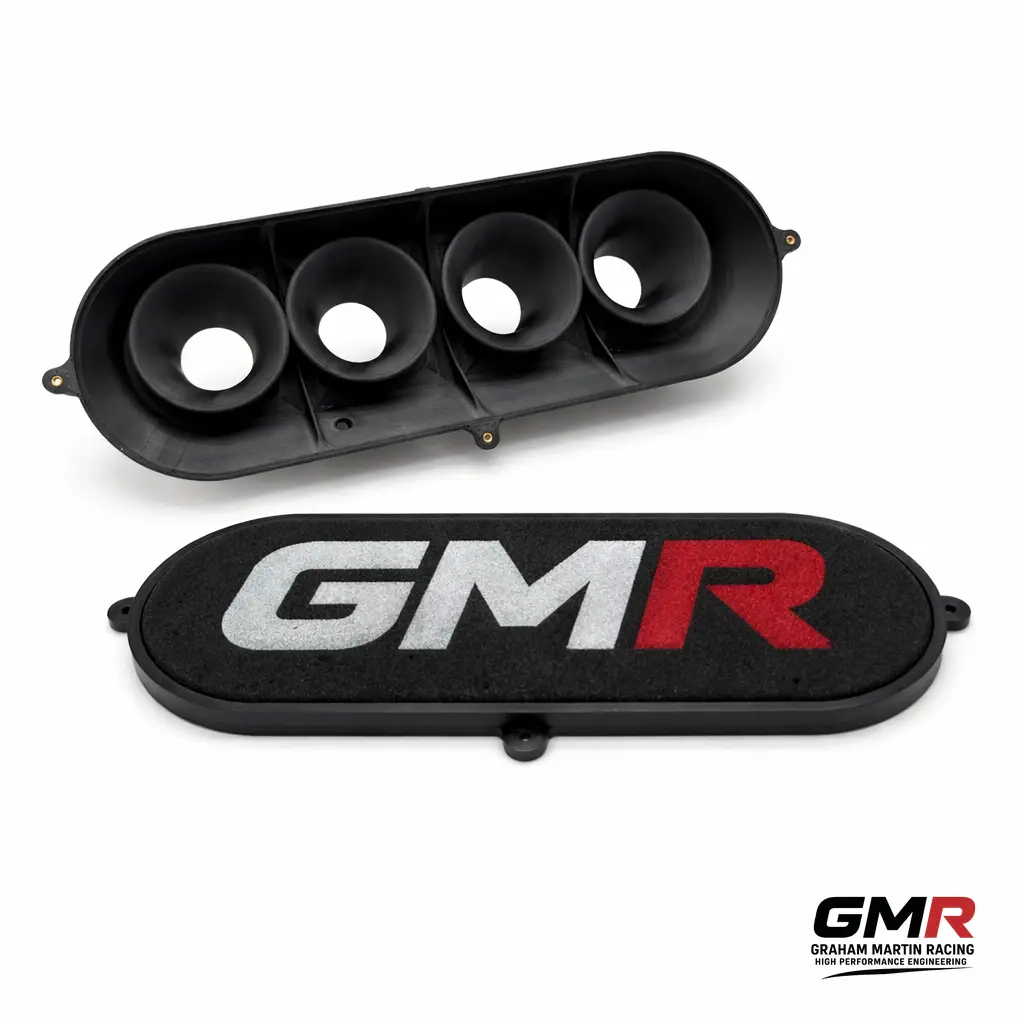
Bolt a set of trumpets onto a clean set of individual throttle bodies and the engine looks the part. But the part that matters isn’t how they look down the inlet — it’s whether they’re the right length and the right shape for your combination. After years building intakes at the sharp end of motorsport, I can tell you the difference between a set of velocity stacks that’s tuned and a set that’s just fitted is worth real, measurable power. This is how velocity stacks for ITBs genuinely work, what’s marketing, and how to choose ones that actually do something.
What a velocity stack actually does
A velocity stack — call it a trumpet, air horn or ram tube — is a flared, parallel-sided tube fitted to the entry of each throttle body. It does two distinct jobs, and people routinely conflate them:
- It smooths air entry at high velocity. The flared bell mouth lets air enter and stay attached to the pipe walls — laminar flow, moving in clean parallel layers rather than tumbling.
- It tunes the intake tract as a resonating pipe. The total length sets the frequency of the pressure pulses inside the runner, which is where the real volumetric efficiency (VE) gains live.
Get both right and the stack smooths the air and times the pressure waves so the engine breathes harder in the rev range you actually use. Get them wrong and you’ve got jewellery.
The bell mouth: it’s about flow quality, not magic horsepower
The primary, localised job of the bell mouth is keeping flow attached. When air meets a sharp, unradiused edge it can’t follow the corner — you get boundary-layer separation, the stream detaches, and turbulent eddies form right at the opening. That turbulence effectively shrinks the usable cross-section of the inlet and dumps energy as drag.
A properly profiled stack guides the air with a continuously changing radius, holding a high flow coefficient that approaches the theoretical maximum of 1.0, where a sharp-edged inlet sits well below. That’s why we machine a true parabolic curve into the lip rather than a token chamfer — it’s the difference between flow that stays glued to the wall and flow that trips over the edge.
Now the honest part, because I’m not here to sell you fairy dust. Accelerating air into a duct is inherently efficient, and the difference between a crude radius and the most aerodynamic shape possible is only a few percent. The inlet end is also never the smallest or most restrictive part of the system — the biggest losses happen down at the valve seat. So treat any “X% power from the radius alone” claim with caution. The bell mouth matters for flow quality and avoiding separation. The bigger usable gains come from length.
The radius stops the air tripping at the door. The length decides how hard the engine inhales. Both matter — but only one of them is worth chasing big numbers over.
Length and pressure-wave tuning: the main event
This is where velocity stacks for ITBs earn their keep. As the intake valve slams shut, the column of air rushing toward the cylinder stops dead and creates a positive pressure wave that travels back up the runner. Tune the length correctly and that reflected wave arrives back at the valve just as it opens again, ram-charging the cylinder for free.
The trade-off is consistent and worth committing to memory:
- Longer stacks time the slower waves and favour mid-range torque.
- Shorter stacks work at higher RPM where the waves cycle faster, favouring top-end horsepower.
The critical detail almost everyone misses: it’s the total intake tract length that tunes, not just the trumpet. The length you care about runs from the back of the intake valve all the way to the radiused entry of the stack. The trumpet is simply the adjustable end of that pipe.
A rough rule of thumb to start from
A simple starting formula is:
84,000 ÷ tuned RPM = runner length (inches)
Measured from the back of the intake valve to the radiused entry, and most people use peak-torque RPM as the “tuned RPM”. Treat this as a starting point, not gospel — different “simple” methods disagree wildly across the 4,500–9,000 RPM range, and resolving which is correct really needs engine dyno work or proper time-domain wave simulation. Most road engines use 2nd-harmonic tuning because it gives strong torque gains without absurd runner lengths.
Two inputs change the answer more than people expect:
- Cam timing. Camshaft selection strongly affects intake valve opening, which directly shifts the pressure-wave timing. Change the cam and you change the ideal length.
- Air temperature. Hotter intake air increases the speed of sound, which moves the ideal runner length. This is one reason heat management isn’t separate from intake tuning — it’s part of it.
The “standoff” myth, corrected
People will tell you a longer stack “captures” standoff — that fuel mist you see pushed back out of the bell mouth at full throttle, low RPM. That’s not quite what’s happening. The intake valve is closing too late and the chamber is overfilling and blowing back before the valve shuts. A longer inlet creates a later-arriving pressure wave that helps hold that charge in the chamber. Understand the mechanism and you tune for it deliberately instead of guessing.
Why race ITB setups are often short — and why that’s deliberate
Look at almost any individual throttle body setup built for circuit work and the runners are just long enough to get the bodies physically situated. Packaging frequently wins, and for a high-RPM race engine that’s often exactly right — short tracts favour the top end where these engines live. The mistake is doing it by accident. If you’re running an ITB kit that actually fits and performs, the stack length should be a decision tied to your peak-power target, not whatever cleared the bonnet.
This is exactly the philosophy behind our platform-specific kits — like the Honda K20 Race/Kit car ITB kit (and the deeper dive on what actually works on the K20) and our Peugeot XU work for the GTi6 and Mi16 — where the runner geometry is engineered around the head, the cam and the target rev range rather than sold as a universal-fit afterthought. If you want the full picture on why that matters, read what high performance engineering really means.
Choosing velocity stacks for your ITBs
- Match the bore and fitment exactly. A stack that doesn’t sit flush at the throttle body face creates a step — and a step trips the flow you spent money smoothing.
- Buy a true profile, not a chamfer. A parabolic curve machined from billet, not a pressed cone with a token lip.
- Decide your tuned RPM first. Pick the rev point you want to make power at, then size the total tract — stack included — around it.
- Plan for an airbox. Open trumpets pull hot underbonnet air and lose tuning stability. A box with double-wall, air-gap design keeps intake temperatures down and protects the resonance length.
Our straight bolt-on velocity stacks are designed to drop onto Jenvey and DCOE-type bodies with a properly radiused entry, and they pair with our airboxes — the Peugeot 205/306 airbox and the Jenvey OBX SF airbox — so you get smooth entry and a controlled, cooler intake charge rather than a set of trumpets gulping engine-bay heat.
Need a length or profile that doesn’t exist off the shelf? That’s our day job. We design and manufacture bespoke intake components in the UK, and for genuinely one-off geometry we use 3D printing as part of the motorsport workflow to get the exact curve and length your engine wants.
FAQ
Do longer or shorter velocity stacks make more power?
Neither universally. Longer stacks favour mid-range torque by timing slower pressure waves; shorter stacks favour high-RPM horsepower where waves cycle faster. The right answer depends on your tuned RPM, cam timing and intake temperature — and it’s the total tract length, not just the trumpet, that matters.
How much power does the bell-mouth radius actually add?
Less than the marketing suggests on its own — usually a few percent at most, because air entering a duct is already an efficient process and the biggest flow losses are at the valve seat. The radius matters most for flow quality and avoiding turbulent separation. The bigger gains come from getting the length right.
Can I just bolt on velocity stacks without an airbox?
You can, but you’ll pull hot underbonnet air, and hotter air raises the speed of sound and shifts your tuned length. A double-wall, air-gap airbox keeps intake temperatures down and stabilises the tuning — it’s part of the system, not an accessory.
Why do most race ITB setups use short runners?
Packaging and top-end focus. Race engines live at high RPM where short tracts tune best, and the bodies often need to be tucked in tight. The key is making short a deliberate decision tied to your peak-power target, not an accident of what fitted under the bonnet.
Related: Peugeot XU Throttle Bodies: How to Choose a Kit That Fits Your Head and Makes Real Power