
Engine Calibration Specialist in Northampton: How GMR Tunes for Real, Repeatable Power
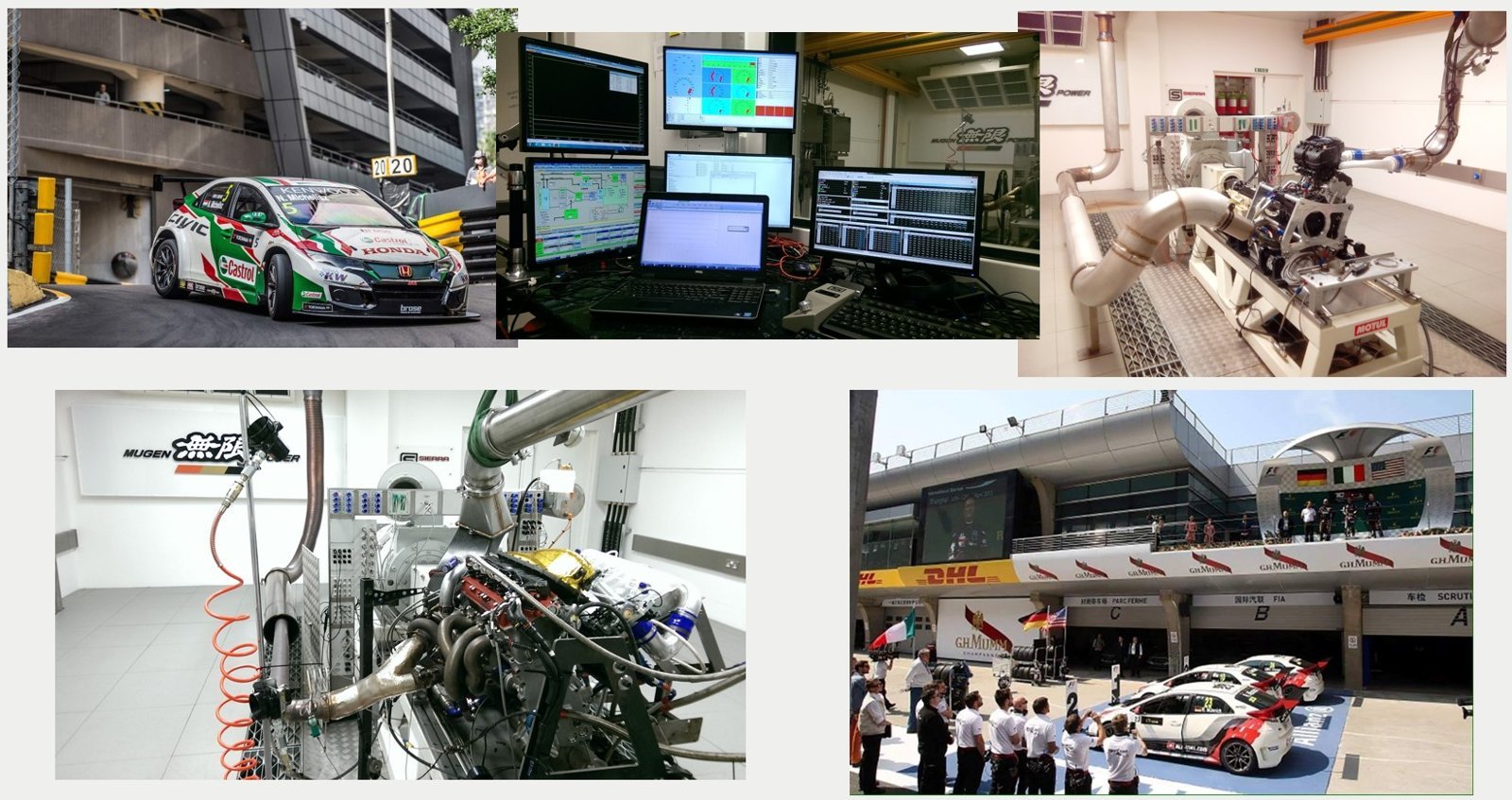
If you’re searching for an engine calibration specialist in Northampton, you’ve usually reached a point where “near enough” no longer cuts it. Maybe you’ve changed the intake, fitted a built bottom end, or you’re commissioning a competition engine and you want the map to actually match the hardware in front of it — not a generic file pulled off a shelf. I’m Graham Martin, and at GMR we calibrate engines properly: on a load-bearing dyno, cell by cell, with proper knock detection, until the numbers are right and repeatable. This is how that work is actually done, and what separates a real calibration from a power claim on a flyer.
What engine calibration actually controls
Since the early 1990s, almost every engine has been governed by an on-board computer (the ECU) which, among other things, defines ignition timing, fuelling and boost pressure for every combination of engine speed and load. Calibration is the process of setting those values correctly for your specific combination of parts, fuel and operating conditions.
Factory maps are a deliberate compromise. From the factory, an ECU is set conservatively to cover global conditions, varying fuel quality and emissions standards. Manufacturers also routinely detune lower-spec models within a range — the same engine restricted to make the higher-spec car look like better value. None of that is arbitrary; it reflects real trade-offs around durability, emissions and fuel tolerance. But once you’ve moved away from the standard specification — different intake, different exhaust, more boost, a built engine — those compromises no longer fit, and the calibration has to be rebuilt around the actual hardware.
As a Northampton-based engine calibration specialist, we work across both OEM and aftermarket ECUs. On the OEM side we specialise in Subaru, Mitsubishi, Mazda, Honda and Keihin units; on the aftermarket side, all standalone ECUs are catered for. If you want the deeper methodology, we’ve written it up in detail in our guide to ECU calibration for motorsport in the UK.
Fuelling: getting AFR right, not “rich and safe”
The petrol stoichiometric reference is 14.7:1 air-fuel ratio (Lambda 1). In closed loop, the ECU uses lambda sensor feedback to hold that target — which is why, on a typical OEM strategy, editing the fuel map values in closed loop does nothing to AFR. The fuel trims simply move to compensate and keep you at Lambda 1. People waste hours not understanding this.
Under high load and high RPM the ECU switches to open loop: the short-term fuel trims go inactive and set to zero, and now the fuel map genuinely controls AFR. That’s where the real power-fuelling work happens, and where a sloppy calibration either melts pistons or leaves performance on the table.
All of this depends on the ECU knowing the true mass airflow — grams per second — entering the engine, so it can calculate injector open time and hit the target AFR. This is exactly why bolt-on intake changes catch people out: fit most aftermarket induction kits, or even a replacement panel filter, and the MAF sensor reading shifts. The MAF scaling has to be re-adjusted or the fuelling drifts off target. It’s also why we design and manufacture intake systems around the engine in front of us rather than a marketing brochure — the airflow and the calibration have to be developed together.
Some platforms run speed-density (MAP-based) rather than MAF. On a Subaru running EcuTek ProECU, for example, the speed-density strategy interpolates between maps for each cam angle to output the injector open time needed for Lambda 1. The principle is the same regardless of method: the model has to reflect reality. On a self-learning OEM strategy the ECU refines its volumetric efficiency table over time from closed-loop O2 feedback; on a standalone ECU, a tuner builds that table on the dyno, cell by cell. There’s no shortcut to doing it cell by cell.
Ignition timing, MBT and the trap that wrecks engines
For optimum efficiency and torque, ignition should occur near MBT — the Minimum advance for Best Torque. Advance the spark and the mixture has more time to burn and push the piston down, which makes more power; retard it and you’re safer but down on power. Simple enough in principle.
The complication is knock. Advance timing gradually under certain conditions and you reach the knock limit — and at low speed, low load that limit is typically reached before MBT. So you can’t always run the timing the engine “wants”; the knock limit caps it.
Here’s the detail most rolling-road operators ignore: the torque curve is very flat near MBT. Move 5 degrees either side of MBT and torque changes by only about 1% — and you cannot reliably measure a 1% torque change on a chassis dyno. So chasing tiny dyno gains by piling on advance is chasing noise.
Worse: if detonation pressure spikes land at the right point in the cycle, they can actually show an increase in indicated torque on the dyno. I’ve seen engines post a healthy torque gain while quietly detonating themselves to death. A bigger number on the screen is not proof of a good map.
Knock detection isn’t optional
This is the single biggest reason to use a proper calibration specialist rather than a generic remap. Serious engine damage can occur during tuning, which is why you must always use a quality knock detection system when calibrating an engine. To genuinely optimise ignition timing you need a load-control dyno and to calibrate to the MBT or knock limit using a standalone knock detection system from the likes of Phormula or Plex — not the factory knock sensor and a hopeful ear.
The gold standard, in-cylinder pressure monitoring, is largely confined to OEM and high-end motorsport on cost grounds — an ECU with onboard cylinder-pressure monitoring runs £20,000+ before you’ve even bought the sensors. In the aftermarket it’s very rare. Standalone knock monitoring bridges that gap and is exactly what a serious calibration setup should have on the bench.
Calibration as part of the whole build
A calibration is only ever as good as the hardware it sits on. Get the airflow, fuelling capacity and mechanical package right and the map can be aggressive and reliable; get them wrong and even a brilliant tuner is papering over cracks. That’s why we treat calibration as one strand of the same engineering discipline as our bespoke race engine manufacture and our custom component work.
It’s the same with intakes. If you’re running individual throttle bodies, the calibration and the hardware have to be developed as a pair — something we cover in our piece on the Subaru EJ20 ITB kit and our carbon composite intake manifold work. As a competition engine specialist we run proven platforms for Honda K20A/C1, Subaru EJ20/EJ22/EJ25, and Peugeot XU and TU engines, alongside custom GRE and fully bespoke units — and every one of those gets a calibration developed for that exact build.
Once it’s mapped, the proof is on track. If you want somewhere to validate the result, our friends at Trackday Finder are a good place to find a circuit day near you. Related: if you’re after a bucket-list circuit, see their guide to a Spa-Francorchamps track day.
FAQ
What does an engine calibration specialist in Northampton actually do?
We rebuild the ECU’s fuelling, ignition timing and boost control to suit your specific engine, intake, fuel and intended use — on a load-control dyno with standalone knock detection — until the engine makes safe, repeatable power. We work on OEM ECUs (Subaru, Mitsubishi, Mazda, Honda, Keihin) and all aftermarket standalone ECUs.
Do I need a remap after fitting an aftermarket intake?
Almost always, yes. Most induction kits, and even replacement panel filters, change what the MAF sensor reads. Without re-scaling the MAF (or correcting the speed-density model), the ECU calculates the wrong mass airflow and your fuelling drifts off target. The intake and the calibration need to be developed together.
Why is a bigger dyno figure not proof of a good map?
Because the torque curve is very flat near MBT — 5 degrees of timing either side changes torque by only ~1%, which is below what a chassis dyno can reliably measure. Detonation can even register as a torque gain while damaging the engine. A trustworthy calibration is verified with proper knock detection, not just a peak number.
OEM reflash or standalone ECU — which should I run?
It depends on the platform and goals. An OEM reflash keeps factory integration and is often ideal for road and fast-road builds; a standalone ECU gives full control for competition engines and complex setups. We calibrate both, and we’ll tell you honestly which suits your combination.
Based in Northampton with UK manufacturing and free UK delivery over £100, GMR builds and calibrates engines to perform and last. If you want a calibration done properly, get in touch and tell us about your combination.