
Peugeot XU Throttle Bodies: How to Choose a Kit That Fits Your Head and Makes Real Power
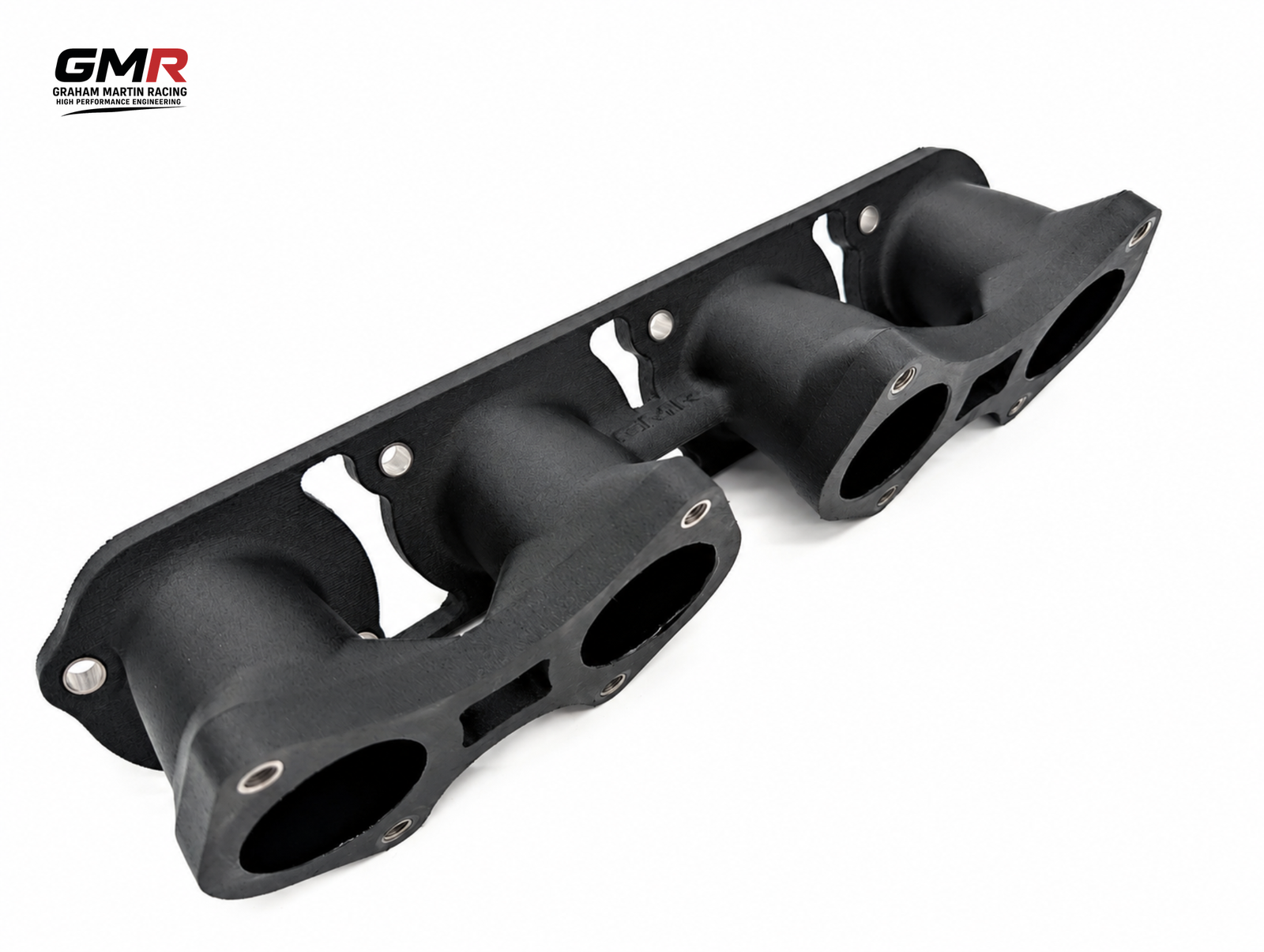
If you’re searching for Peugeot XU throttle bodies, you’ve already worked out that the factory inlet on a 205 GTI, 405 Mi16 or 306 GTI-6 is the single biggest restriction holding the engine back. I’m Graham Martin, and I’ve spent years building and calibrating XU and TU-based race engines. The good news is the XU family responds brilliantly to individual throttle bodies. The bad news is that “Peugeot XU” covers half a dozen distinct cylinder heads, and getting the wrong manifold or dowel pattern is the quickest way to turn a £1,000+ kit into an expensive paperweight.
This guide cuts through the marketing. I’ll cover which XU engine takes which throttle bodies, the real differences between DCOE-pattern and direct-to-head designs, bore sizing, fuelling, and the ECU work nobody can skip. If you want the wider principles first, our guide on buying an ITB kit that actually fits and performs is a solid companion read.
Know your XU engine before you buy anything
The XU family spans 8-valve and 16-valve heads, and the intake faces are not interchangeable. Here’s the breakdown that matters for throttle body fitment:
- 8-valve XU5 (1.6) and XU9 (1.9) — the 205 GTI engines. Throttle bodies bolt to the 8v head intake face, typically via a port-matched cast aluminium manifold suited to the OEM intake ports.
- 16-valve XU9J4 (1.9) — 205 Mi16, 405 Mi16, and a popular 205 GTI conversion. Kits such as the 405 Mi16 45mm bodies are designed around this head.
- 16-valve XU10J4 (2.0) — 306 S16. Twin-housing bodies on a port-matched cast aluminium manifold for the OEM ports.
- 16-valve XU10J4RS (2.0) — 306 GTI-6 and Rallye, Citroën Xsara VTS, and 205 GTI-6 conversions. Our dedicated Peugeot GTi6 ITB guide goes deeper on this platform.
The head differences that catch people out
Here’s where “close enough” gets expensive. There are four important differences between the XU9J4 and XU10J4 heads, and two of them directly affect what manifold and dowels you need:
- The XU10J4 head has an oil return drain hole on the side for the cam sensor/vacuum pump. The XU9J4 has no equivalent.
- The XU9J4 uses nine head studs; the XU10J4 uses ten. (Exhaust ports are identical.)
- The inlet manifold dowel locations differ between the two heads.
That last point is the killer. A manifold spec’d for an XU9J4 will not locate correctly on an XU10J4 dowel pattern. Before you order, confirm exactly which head casting you have — not which car it came in. The 405 Mi16, for example, ran the early 1.9L XU9J4 and the later 2.0L XU10J4, so a kit advertised for “405 Mi16” may need to cover both. Always match manifold and dowels to the actual head in front of you.
DCOE-pattern twin bodies vs direct-to-head: what actually changes
There are two architectures you’ll encounter for the XU, and the distinction is genuinely worth understanding:
1. DCOE bolt-pattern twin-housing bodies on a separate manifold
These mimic the classic Weber DCOE bolt pattern. The best examples use lightweight, precision-machined billet aluminium twin round housings with shaftless butterfly technology and knife-edged blades, bolted to a port-matched cast aluminium inlet manifold. The shaftless approach removes the throttle shaft from the airflow path — on a conventional body the shaft and its boss sit right across the bore, disrupting flow and creating a wake at part throttle. Removing it cleans up the flow profile measurably, particularly off idle and at small openings where most road and trackday driving lives.
The separate manifold also gives you a tuning lever: runner length. The manifold sets the effective intake tract, and that governs which RPM the pressure-wave tuning peaks at. Get it right and you exploit the inertia ramming effect to fill the cylinder beyond what static pressure alone would manage.
2. Direct-to-head bodies
Direct-to-head systems bolt the body straight onto the head face with no intermediate manifold. They’re more common on the smaller TU engines but the principle is the same: the shortest, simplest path. The trade-off is that you give up the runner-length tuning the separate manifold provides — what you see is what you get, so the trumpet and any extension tubes do the tuning work instead.
Whichever route you take, the trumpet geometry matters far more than people expect. A well-radiused entry and the right length can be worth real power across the band. We dig into the mechanism in our piece on velocity stacks for ITBs — it’s not decoration, it’s the part that conditions the air before it ever reaches the valve.
Throttle body bore sizing for the XU
Bigger is not automatically better. Oversize bores kill air speed at low and mid RPM, which is exactly where a road or club car spends its life. Sensible sizing for the XU family:
- 16-valve XU9J4 / XU10J4 / XU10J4RS: 45mm or 48mm are the standard, proven choices. 45mm suits a fast road or lightly built engine; 48mm is for serious cammed, high-RPM builds. Inclined-blade options (e.g. 30°) help packaging in a tight engine bay.
- 8-valve XU5 / XU9: a wider range exists — 40, 42, 45, 48 and 50mm depending on the kit. For most 8v 205 GTI builds, 45mm is the sweet spot; only the most aggressive engines justify 48–50mm.
On the engineering detail: serious bodies run an 8mm throttle shaft in brass for longevity, and the best use sealed bearings rather than plain bushings so the shaft doesn’t wear and develop the air leaks that wreck idle quality over time. That’s the difference between a body that still seals properly after three seasons and one that doesn’t.
What’s in a proper kit
A well-specified XU throttle body kit should arrive as a complete, ready-to-fit assembly, not a box of parts you finish in your garage. Expect:
- Billet-machined throttle linkage
- Aluminium extension tubes (runners) and billet ram pipes/trumpets
- A one-piece billet aluminium fuel rail with brackets to suit a range of injectors
- The port-matched manifold (on DCOE-pattern kits)
- Fitting instructions and the small parts to do the job once
If you’re going further than off-the-shelf — different runner lengths, a specific airbox, or a one-off to clear a particular bay — that’s exactly the kind of work we do. See our approach to a bespoke intake manifold and our custom race engine components, which can also be produced via Direct Digital Manufacturing for organic, flow-conducive geometry that machining can’t easily reach. If a carbon intake is on your radar, our guide to a carbon intake manifold for a race engine covers what genuinely works.
Fuelling and ECU: the part you cannot skip
Let me be blunt, because this is where most XU ITB projects come unstuck: throttle bodies require an aftermarket ECU. The OEM management cannot run open ITBs correctly — there’s no plenum and no stable manifold vacuum signal to work from. Megasquirt, Omex, Emerald and DTA are all proven on XU builds; one documented XU9-based engine ran 10.8:1 compression on a 60-2 trigger wheel with 360cc injectors.
On injector sizing, the accepted rule of thumb is to add 20% over your calculated requirement. That margin covers injector deterioration over time and gives headroom if the engine asks for more fuel than the spreadsheet predicted.
And on maps: any base map supplied with a kit is a starting point, offered as-is. Dyno tuning is essential — not optional — to avoid damaging the engine through lean running. How we actually do that work is covered in our guide to ECU calibration for motorsport.
FAQ
Will Peugeot XU throttle bodies work with the standard ECU?
No. Open throttle bodies remove the stable manifold vacuum the factory ECU relies on. You need a standalone aftermarket ECU — Megasquirt, Omex, Emerald and DTA are all commonly used on XU engines — and the engine must be dyno-tuned for the new setup.
Can I fit a 405 Mi16 throttle body kit to a 306 GTI-6?
Not without checking carefully. The 405 Mi16 ran XU9J4 and XU10J4 heads; the GTi6 uses the XU10J4RS. The inlet manifold dowel positions and stud counts differ between the XU9J4 and XU10J4. Always confirm the kit’s manifold matches your actual head casting, not just the car.
What bore size should I run on a 16v XU?
45mm for a fast-road or lightly built engine, 48mm for a high-revving competition build. Going bigger than your engine can use loses air speed in the mid-range and hurts driveability, so size to the build, not the badge.
What’s the advantage of shaftless throttle bodies?
Removing the throttle shaft from the bore eliminates the obstruction that disrupts airflow at part throttle, cleaning up the flow profile where most driving happens. Combined with knife-edged blades, it gives crisper response and better low-to-mid airflow than a conventional shafted body.
If you’re building an XU and want bodies that fit your specific head first time and make repeatable power, get in touch. I’d rather have a five-minute conversation about your head casting now than rebuild your kit later. We ship across the UK with free delivery over £100.
Related: once your engine is running, put it to use — see this guide to car track days in the UK (@ Trackday Finder).