
Individual Throttle Body Kit UK: How to Buy One That Actually Fits and Performs
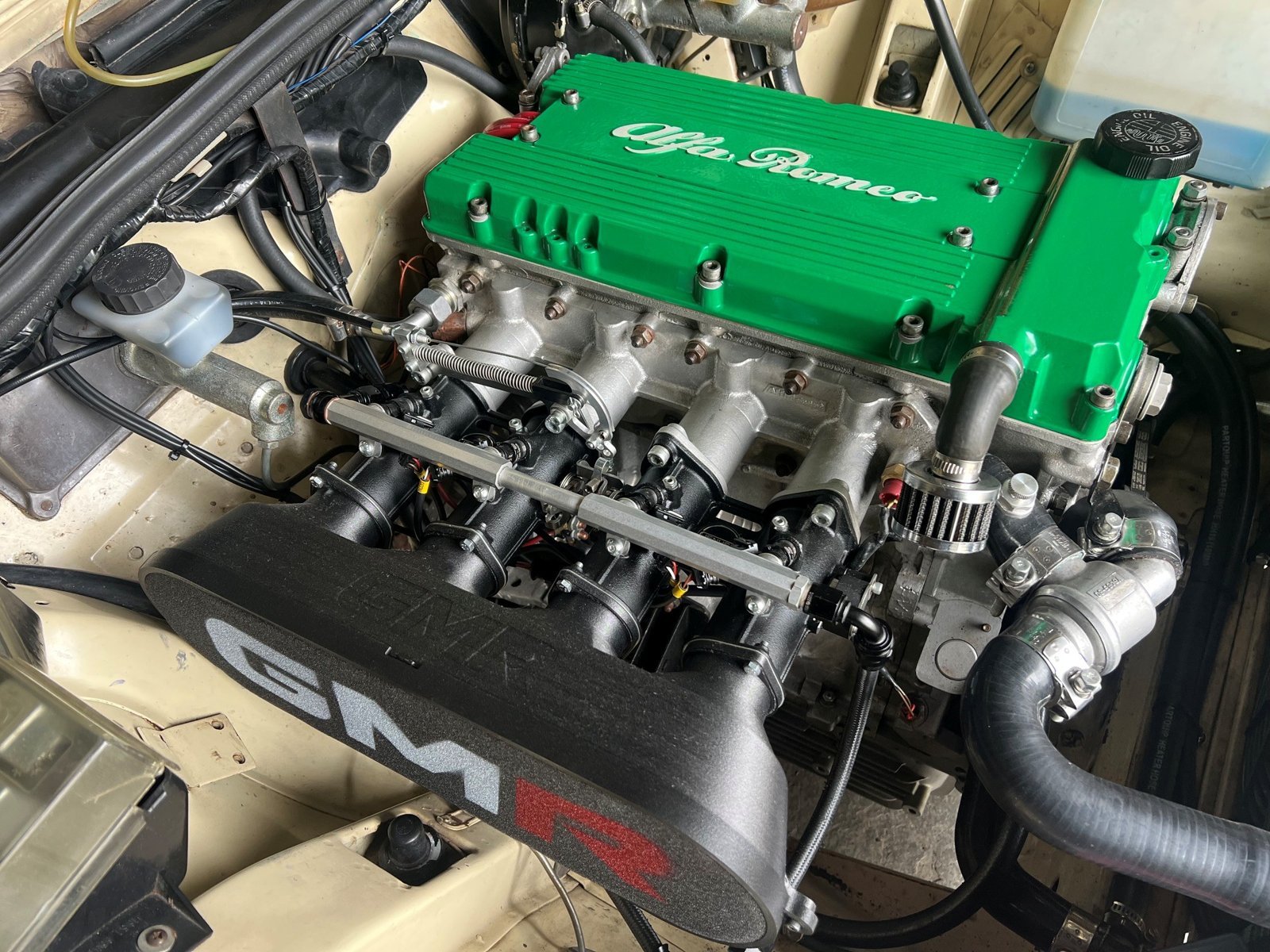
If you’ve started shopping for an individual throttle body kit UK side, you’ll have noticed two things: there’s no shortage of “universal” hardware on the market, and almost none of it tells you how it actually flows or fits your specific engine. I’m Graham Martin, and I’ve spent enough time at the sharp end of motorsport to know that an ITB kit lives or dies on detail — bore sizing, stack length, packaging and calibration. Get those right and you unlock genuine, repeatable power. Get them wrong and you’ve bought an expensive throttle response upgrade with a flat spot built in.
This guide cuts through the marketing. I’ll explain what a proper individual throttle body kit needs to do, what to check before you spend money, and why I build mine here in Northampton around specific engine combinations rather than shipping a one-size-fits-nothing box.
What an individual throttle body kit actually does
An individual throttle body (ITB) setup replaces a single plenum-and-throttle arrangement with one throttle butterfly per cylinder, each fed by its own intake runner and velocity stack. The benefits are well understood by anyone who’s run them properly:
- Sharper throttle response — each cylinder draws from its own short intake tract, so the air column is light and reacts instantly.
- Better volumetric efficiency at high RPM — short, tuned runners and well-shaped stacks reduce restriction where a plenum chokes.
- Tuned intake pulses — runner length and stack geometry can be matched to your target rev range instead of a road-car compromise.
- Packaging freedom — no large plenum means a tidy engine bay and easier bonnet clearance on many builds.
None of that is free, though. ITBs demand accurate fuelling because there’s no plenum to average out the signal, and the hardware has to be dimensioned for your engine. That’s where most off-the-shelf kits fall down.
Why “universal fit” is the wrong starting point
I’ll be blunt: “universal” and “close enough” are how you end up with mismatched bores, the wrong stack length and a tune that papers over the cracks. An intake is a tuned system. If the throttle bore is oversized for your displacement and target power, you lose air speed and low-to-mid response. If the stacks are too short, you give away torque you’ve already paid for in the bottom end.
When I size a kit I’m working from real numbers: cylinder displacement, target RPM, the head’s flow characteristics and the injector position that gives clean atomisation. That’s the difference between a part that’s been engineered and one that’s been assembled. For a worked example of how this plays out on a popular platform, read my breakdown of an individual throttle body kit for the Honda K20: what actually works.
What to check before you buy an individual throttle body kit in the UK
Throttle bore size
Bigger isn’t automatically better. The bore should be matched to your displacement-per-cylinder and power target so the air keeps enough velocity for crisp response. I’d rather give you measurable mid-range than a headline peak figure that’s useless on a circuit.
Velocity stack length and shape
Stack geometry is a tuning lever, not decoration. A properly radiused inlet and the correct trumpet length can be worth real area-under-the-curve. If a supplier can’t tell you why their stacks are the length they are, that’s a red flag.
Injector positioning and fuel rail
Injector angle and distance from the valve affect atomisation and wall-wetting. A kit designed around a sensible injector position is far easier to calibrate cleanly, especially on cold starts and part-throttle cruise.
Airbox and filtration
Open trumpets look great on a dyno and ingest grit on a real track day. A made-to-fit airbox protects the engine, stabilises the air supply between stacks and is often worth power and consistency. Treat filtration as part of the system, not an afterthought.
Manufacturing method and repeatability
I use carbon composite and Direct Digital Manufactured (DDM) parts because they’re light, dimensionally repeatable and let me hold tolerances that cast or hand-fettled parts can’t. When you order a second kit two years later, it needs to match the first. Repeatability is engineering, not luck.
Platforms I build ITB kits for
I design and manufacture ITB kits, intake manifolds, airboxes, velocity stacks, injectors and throttle linkages here in the UK for the platforms serious builders actually run:
- Honda K20 — a brilliant base for high-RPM naturally aspirated power, and one of the most popular ITB conversions in the UK.
- Subaru EJ — where packaging and even air distribution across the boxer layout really reward proper design.
- Peugeot XU/TU and GTi6 — classic hot-hatch and kit-car favourites that come alive on individual throttle bodies.
If your combination isn’t on the shelf, that’s not a problem — bespoke and prototype work is a core part of what we do, alongside custom race engine manufacture and calibration.
Don’t forget the calibration
Fitting the hardware is half the job. ITBs need a calibration that understands the throttle-position-based load model, idle stability across multiple butterflies and the transient fuelling that makes a car driveable rather than just fast on a steady-state pull. As a calibrator working with both OEM and aftermarket ECUs, I’d always rather supply a kit alongside a tune that’s been developed around it. A perfectly fitted intake with a borrowed map will never show you what it’s capable of.
An ITB kit is a system: bore, stack, airbox, injector and calibration all working to the same target. Optimise one in isolation and you compromise the rest.
Why buy a UK-made ITB kit
Buying from a UK manufacturer means you’re talking to the people who actually engineered the part. No translation through three resellers, no guessing whether the “spec sheet” reflects what’s in the box. We’re based in Northampton, offer free UK delivery over £100, and back the hardware with the calibration and engineering knowledge to make it perform. If something needs adjusting for your build, that conversation happens directly with the workshop that made it.
FAQ
How much does an individual throttle body kit cost in the UK?
It varies with platform and specification, but a properly engineered, made-to-fit ITB kit is a premium purchase rather than a budget bolt-on. You’re paying for correct bore sizing, tuned stacks, repeatable manufacturing and support — not a generic casting. Get in touch with your engine combination and target output for a precise quote.
Do I need a custom map after fitting ITBs?
Yes. Individual throttle bodies change how the ECU sees load, so they need a dedicated calibration to deliver clean idle, smooth transients and the full power gain. We offer bespoke calibration for OEM and aftermarket ECUs developed around the exact kit you’re running.
Will an ITB kit make my car harder to drive on the road?
Not if it’s sized and calibrated correctly. The “peaky, undriveable ITB” reputation usually comes from oversized bores and a lazy tune. With the right bore size, a proper airbox and a developed map, a road-legal performance car can be perfectly tractable and far more responsive.
Can you build a kit for an engine that isn’t on your standard list?
Absolutely. Bespoke and prototype ITB kits, intake manifolds and airboxes are core to what we do. Send us the engine details and your goals, and we’ll engineer the package around your combination.
Ready to spec your kit?
If you want an individual throttle body kit that’s been engineered for your engine rather than averaged across a hundred others, get in touch with the displacement, head spec, target RPM and intended use. I’ll tell you exactly what it needs — and build it to fit and perform.
Related: What Is Digital Manufacturing? A Practical Guide for Makers
Related: Carbon compositeAirbox for Motorsport: How to Get One That Actually Feeds the Engine
Related: Bespoke Intake Manifold UK: How to Spec One That Actually Works