
Peugeot GTi6 ITB Kit: How to Get Real Power from a GTI6 & Mi16
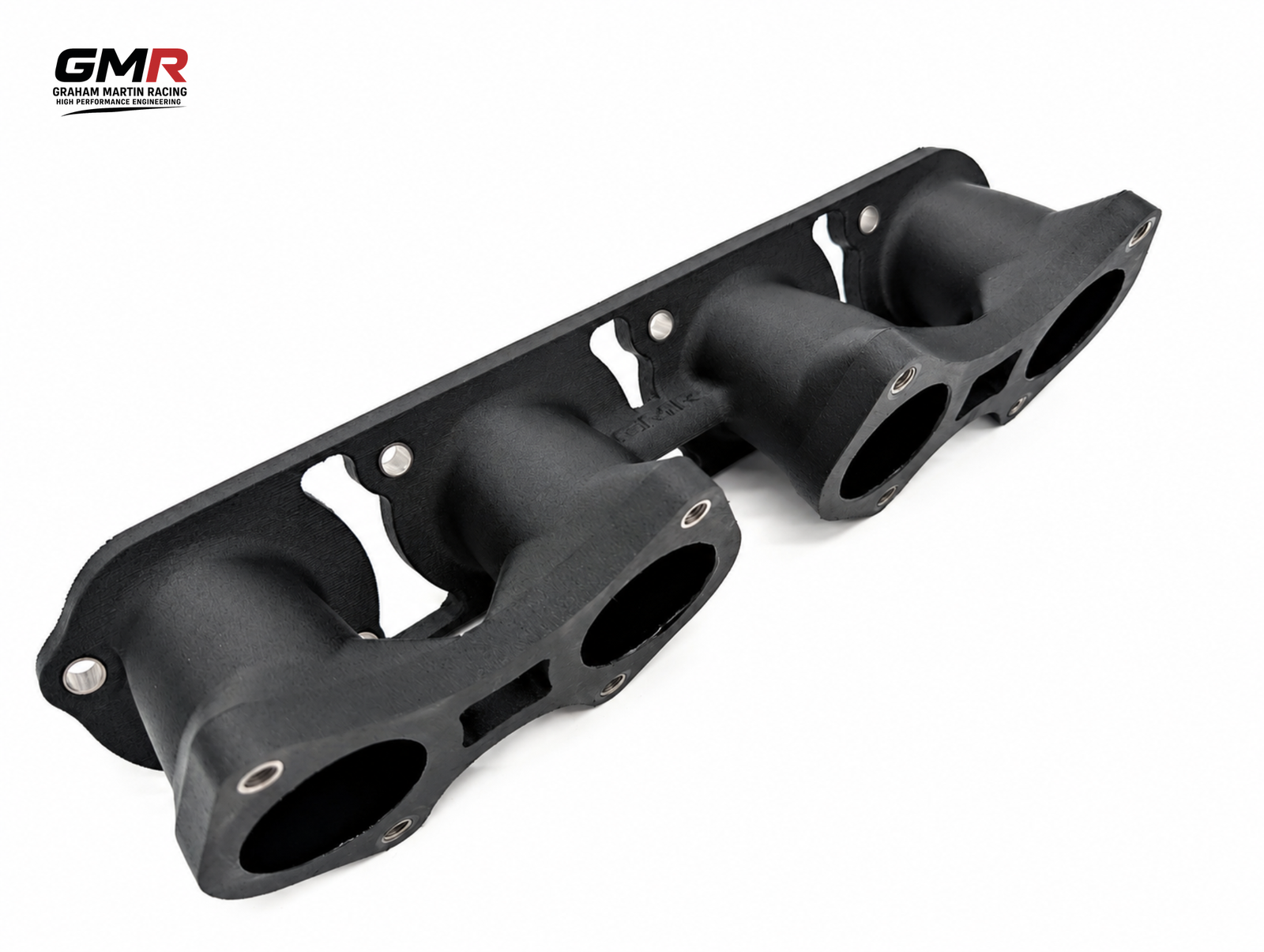
If you’re searching for a Peugeot GTi6 ITB kit, you’ve already worked out that a single throttle body and a tired plastic plenum are leaving power on the table. The Mi16 16-valve lump and the 2.0 GTi6 — respond brilliantly to individual throttle bodies. But only if the kit is engineered around the engine rather than bolted on and hoped for. I’m Graham Martin, and I’ve spent enough years at the sharp end of motorsport to know that “close enough” on an intake is where power quietly disappears.
This is a straight-talking guide to what a proper GTi6/Mi16 ITB kit actually needs to do, what to look for before you spend your money, and the gains you can realistically expect once it’s calibrated correctly.
Why fit an ITB kit to a Peugeot Mi16/GTi6?
The standard intake is a compromise built for emissions, refinement and production cost. A single throttle body forces every cylinder to draw through one shared plenum and one restriction. The result is uneven cylinder filling, lazy throttle response and a flat top end.
Individual throttle bodies give each cylinder its own throttle and its own runner. That delivers three things you can actually measure:
- Sharper throttle response — there’s no shared plenum volume to fill and empty, so the engine reacts instantly to your right foot.
- Better cylinder-to-cylinder balance — matched runners mean each cylinder breathes the same, which is the foundation of a clean, repeatable calibration.
- More usable area under the curve — correctly sized bores and tuned-length stacks broaden torque rather than just chasing a peak number.
On a well-sorted Mi16 & GTi6 it’s realistic to see the high 180s to low 200s at the flywheel on a road-spec engine, climbing further with cams, head work and a quality calibration. The bigger story is how the engine feels: an ITB’d Mi16 & GTi6 wakes up across the whole rev range, not just at the top.
What separates a proper kit from a parts-bin job
This is where I get blunt. There are throttle bodies out there sold as “fits Peugeot” with generic flanges, the wrong bore, no fuel rail provision and stacks chosen because they were in stock. They’ll run. They won’t make the power they should, and they’ll be a nightmare to map. A serious Peugeot 205/306 GTi6 Mi16 ITB kit is designed around the actual head, the actual port shape and the actual packaging constraints of the car.
Correct bore sizing
Bigger isn’t automatically better. Oversized throttle bodies kill port velocity, blunt low and mid-range torque and make the throttle twitchy. The bore needs to suit your engine’s airflow target — a fast road Mi16 & GTi6 wants different sizing to a 7,000+ rpm race build. We size to the application, not to a catalogue.
Runner and stack length
Intake length is a tuning tool. Get it right and you stack a ram-charging effect into the rev range you actually use. Get it wrong and you’ve spent money making the car worse in the gears that matter. This is why velocity stack length isn’t an afterthought — it’s part of the design.
Flange and port matching
The ITB flange must match the head ports cleanly with no step, no mismatch and no “we’ll blend it on the bench.” A step at the port is turbulence, and turbulence is lost flow. Our flanges are machined to the GTi6 port pattern so it bolts up properly the first time.
Fuel rail, injectors and linkage
A kit is more than four throttle bodies. You need a rigid fuel rail that holds injector position and pressure, injectors sized for your power target, and a throttle linkage that opens all four butterflies in perfect sync. A sloppy linkage means cylinders fighting each other and a calibration you can never quite nail. We engineer the linkage and throttle position sensor mounting so it’s smooth, balanced and repeatable.
Airbox or open stacks?
Open trumpets look and sound fantastic, and on a dyno in clean, cool air they’re hard to beat. On a real car, in real conditions, an airbox almost always wins. It gives you a controlled, sealed feed of cool air, keeps hot underbonnet air out, and stabilises the pressure each stack sees. I’ve written about this in detail in why “close enough” costs you power on a race car airbox — it’s worth reading before you decide. For a road or fast-road GTi6, a properly designed airbox is the sensible choice. For a stripped track car, weigh it against your packaging.
You can’t skip the calibration
Here’s the part too many people get wrong: bolting on ITBs without remapping is the fastest way to disappointment. Individual throttle bodies fundamentally change how the engine measures load. Most ITB setups run alpha-N (throttle position) load sensing rather than MAP, and that demands a proper calibration on the dyno.
An ITB kit is only as good as the map behind it. Buy the hardware as half the job — the calibration is the other half.
This is where being both a manufacturer and a calibrator matters. I design the hardware and I map engines, so the kit and the calibration speak the same language. If you’re running an aftermarket or OEM ECU, we can sort the calibration to make the most of the airflow the kit unlocks — that’s the difference between a number on a dyno sheet and an engine that’s safe, driveable and repeatable.
Fitting and supporting modifications
To get the full benefit from a Mi16 & GTi6 ITB kit, plan the supporting work:
- Fuelling — confirm your injectors and fuel pump can feed the target power with headroom.
- Ignition and sensors — a clean trigger signal and a good wideband lambda are non-negotiable for mapping.
- Exhaust — there’s no point opening the intake if the engine can’t breathe out. A matched manifold helps.
- Cams and head work — if you’re chasing the bigger numbers, ITBs and cams work together; size them as a package.
Fitting itself is straightforward when the kit is designed properly — that’s rather the point. No fettling the flange, no fighting the linkage, no improvising a fuel rail mount.
Off-the-shelf or bespoke?
Most Mi16 & GTi6 builds are well served by our off-the-shelf kit, which is engineered specifically for the 205/306 Mi16 platform. If you’re running an unusual combination — a non-standard head, a particular rev ceiling, tight engine bay packaging in a kit car or a specific calibration strategy — we also build bespoke ITB and intake assemblies using carbon composite and Direct Digital Manufacturing. Tell me about your engine and your goals, and we’ll engineer to the combination rather than handing you a one-size-fits-nothing box.
FAQ
How much power will a GTi6 ITB kit add?
On a healthy Mi16 & GTi6 with a proper calibration, gains of 15–25 bhp at the flywheel are realistic for a fast-road build, with significantly more across the mid-range torque curve. Add cams and head work and the numbers climb further. The biggest, most consistent improvement is throttle response and drivability.
Do I need a remap after fitting ITBs?
Yes — always. ITBs change how the engine senses load, usually moving it to alpha-N. Without a dedicated calibration on the dyno you won’t get the power, and you risk running lean or rich in the wrong places. Treat the map as part of the kit, not an optional extra. Usually an aftermarket ECU is required.
Will the kit fit a 205 with a GTi6 engine conversion?
Yes. Our kit is designed for the 205 GTi6 Mi16 platform, which covers the popular 205 conversions. If your build has unusual packaging or a non-standard head, talk to us about a bespoke solution.
Airbox or trumpets for a road car?
For a road or fast-road Mi16 & GTi6, a properly engineered airbox is the better choice — it feeds cool, stable air and keeps the calibration consistent. Open trumpets suit dedicated track cars where packaging and ingestion are managed.
Get the right kit for your build
A Mi16 & GTi6 ITB kit is one of the best upgrades you can make to an Mi16 & GTi6 — provided it’s engineered to fit and backed by a real calibration. If you want hardware that bolts up properly and a map that makes the most of it, take a look at the Peugeot 205/306 GTi6 Mi16 ITB kit or get in touch to discuss a bespoke build. We’re Northampton-based with free UK delivery over £100, and I’d rather build you the right thing once than sell you “close enough.”
Related: Individual Throttle Body Kit UK: How to Buy One That Actually Fits and Performs
Related: Carbon compositeAirbox for Motorsport: How to Get One That Actually Feeds the Engine